Business Context
As a parent, I kept hitting the same wall other parents had.
School communication scattered across calls, paper diaries, and one-off notices. That's where Scool Panda started - a genuinely personal problem before it was a business one.
The Problem
Validating a problem and closing a sale are different questions.
We didn't start by building. We spoke to 50+ schools first to validate the problem, then built based on what we heard. Speaking to schools was easy. Getting them to actually adopt something new was not.
Research & Validation
What 50+ school conversations actually surfaced.
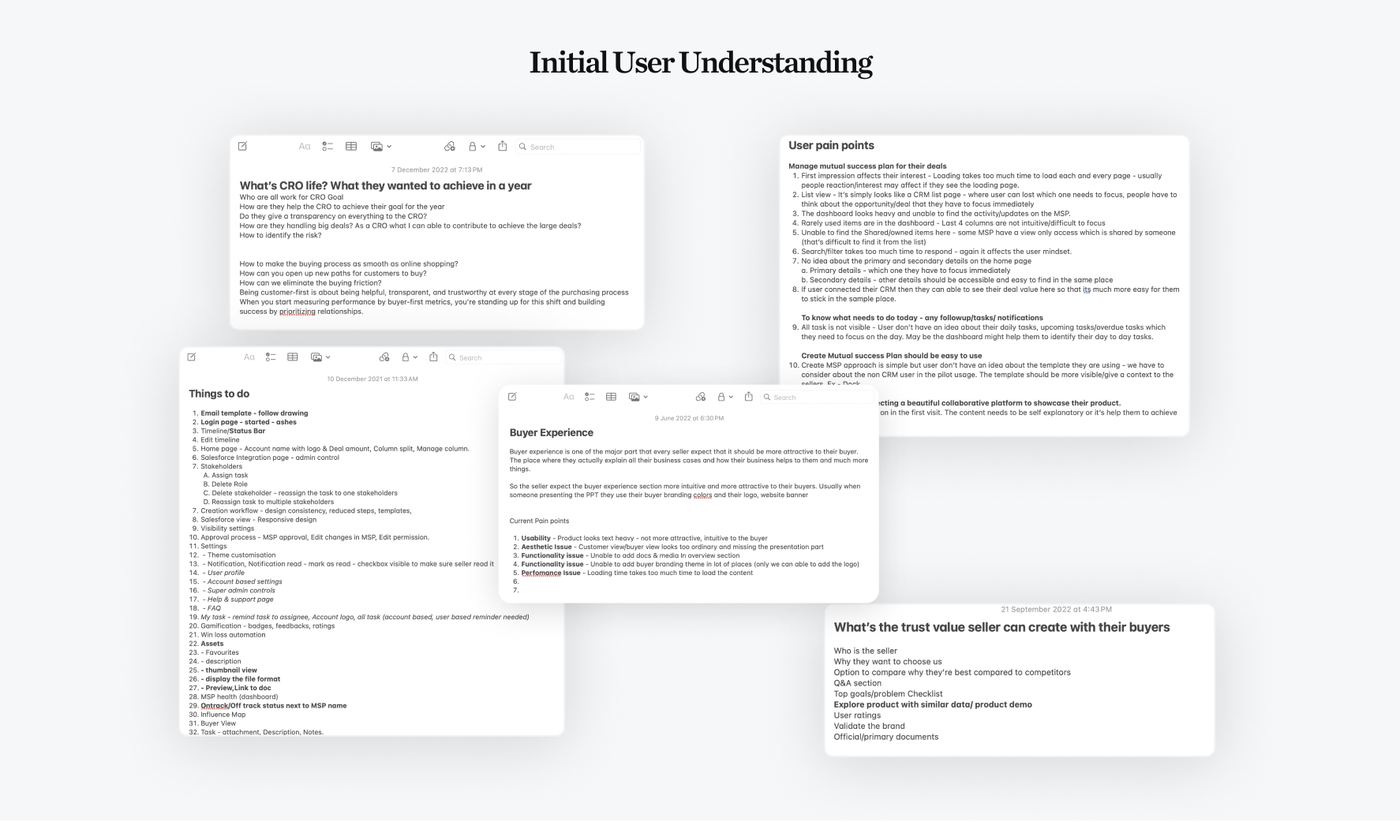
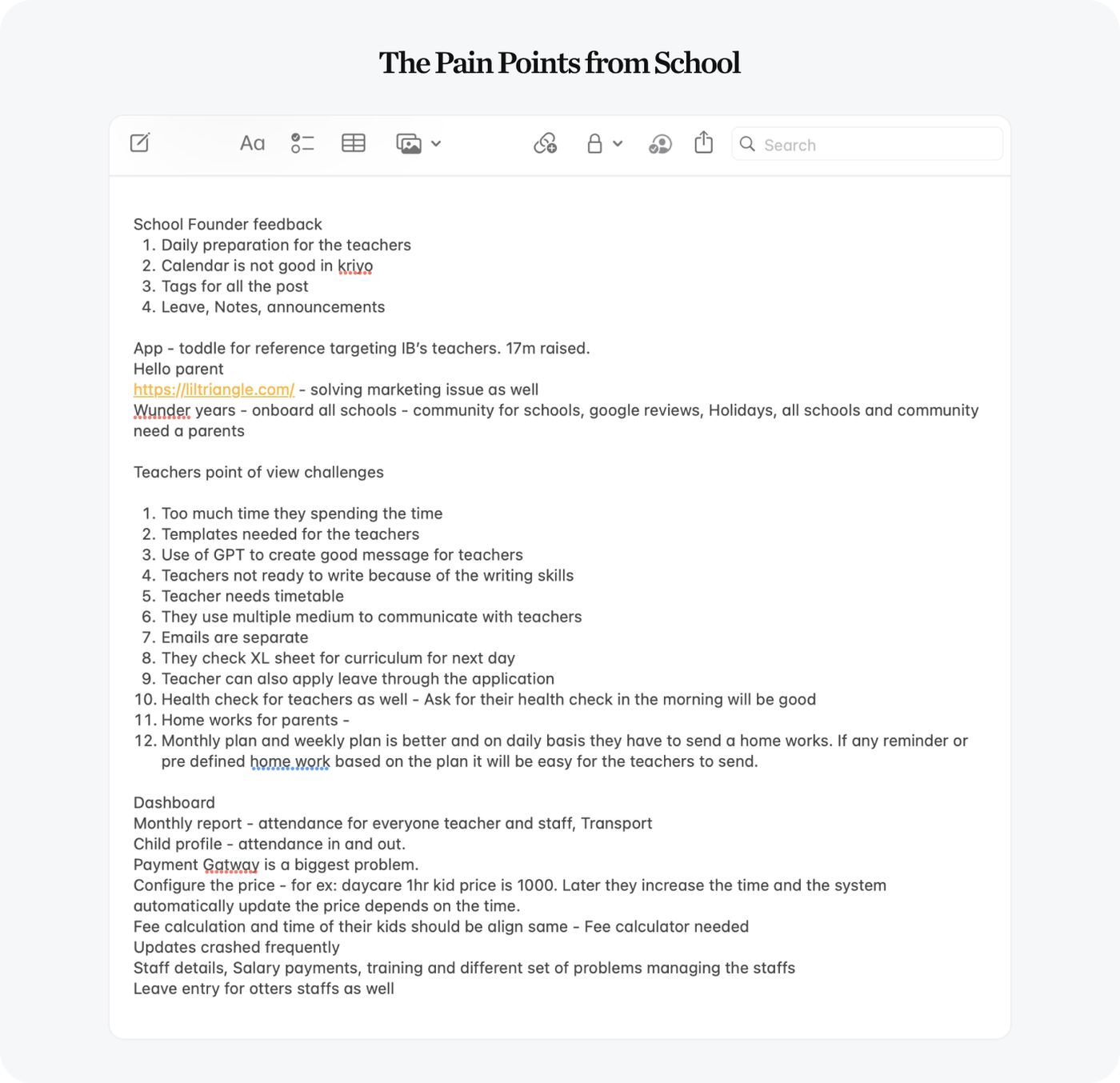
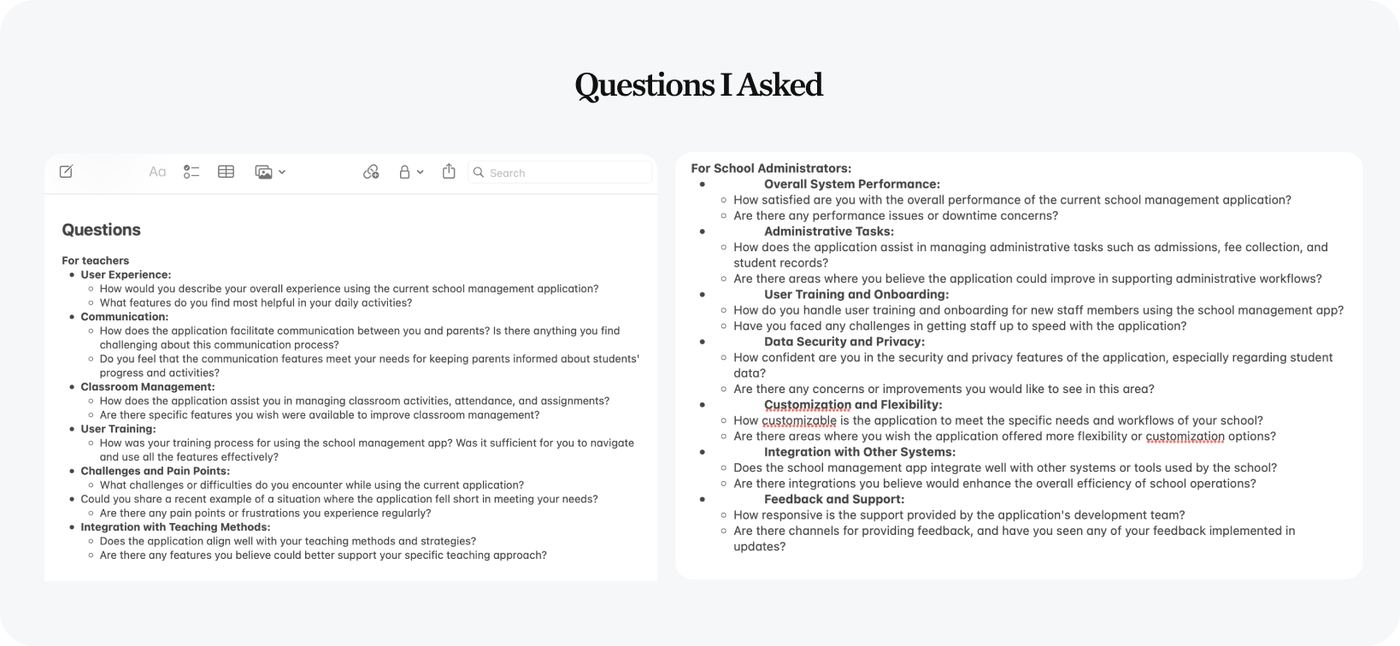
Before any screen was designed, the early discovery work shaped what we built and, just as often, what we didn't. A few of the real notes from that process:
feedback from early discussions
pain points from admins & owners
basic questions we had to clarify first
Constraints
—No co-founder on the technical side - sourced and managed a 10-person dev team myself
—Part-time, running alongside a full-time role at BuyerAssist
—No sales team - founder-led sales, one school at a time
My Leadership Role
Design, development, and sales - all mine to own.
I owned it end to end - product and design myself, sourced and managed a 10-person distributed dev team (3 Android, 2 iOS, 5 web) to build it, and acted as the founder-led salesperson, talking to hundreds of schools across US, UK, and Indian markets to see where this could actually land.
Leadership Scope
Cross-functional collaboration
—Sourced and managed a 10-person distributed dev team (3 Android, 2 iOS, 5 web)
—Acted as the founder-led salesperson, talking to hundreds of schools directly
—Ran multi-market research and sales conversations across the US, UK, and India
—Owned product and design myself end to end, with no separate design hire
Critical Product Decisions
01
Validate before building
50+ school interviews before a single screen was designed.
02
Ship narrow, not full-featured
Attendance and notices first - nothing else - to learn from real schools faster than a fuller platform would have allowed.
Execution
Built and shipped the narrow first version, then spent most of my time in market conversations rather than in Figma - the honest bottleneck was adoption, not product quality.
Evidence
scool panda · product overview
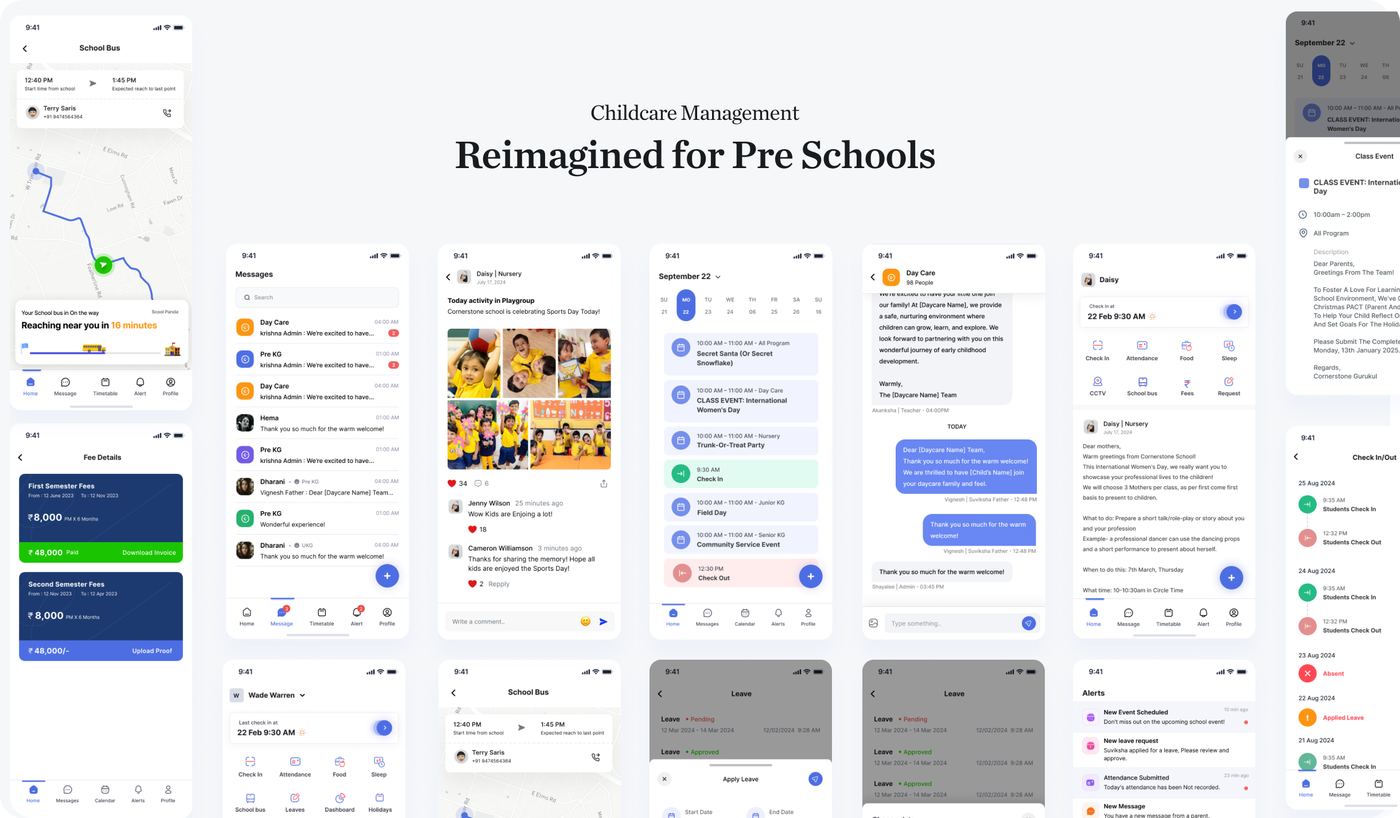
The full picture - parent app, teacher tools, and school admin dashboard, designed and shipped.
parent app
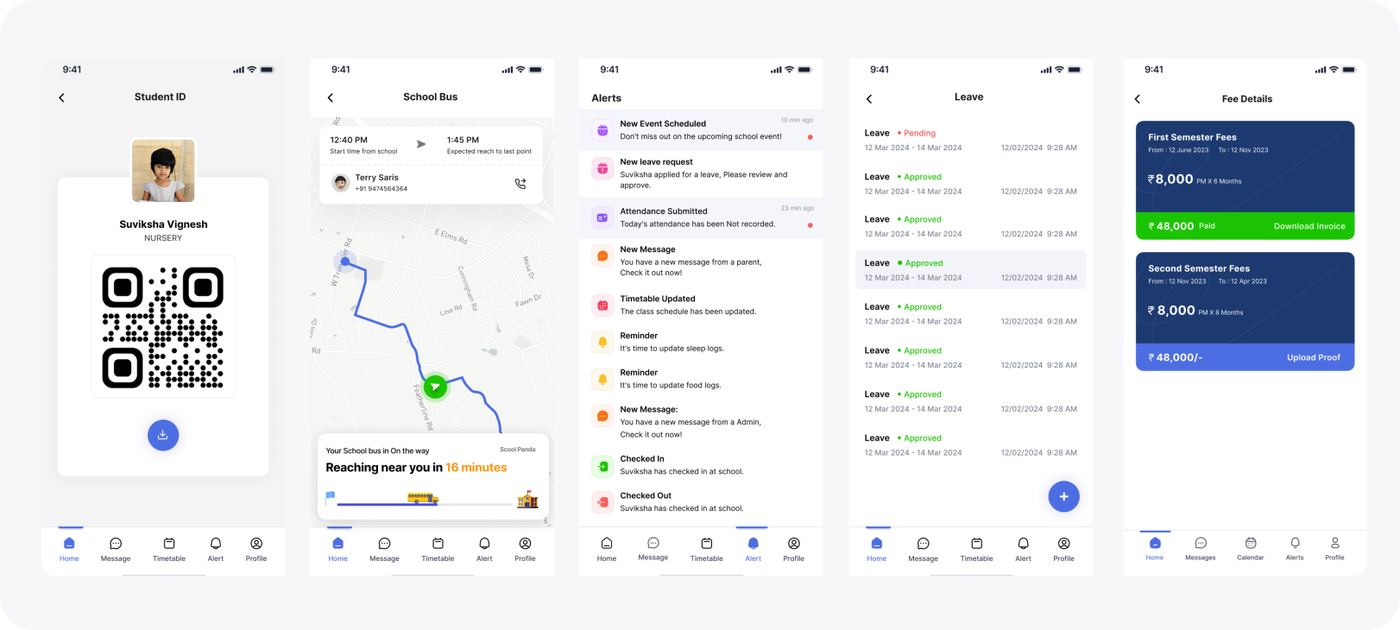
Student ID, live bus tracking, alerts, leave requests, and fee details - the parent-facing view.
school admin · web
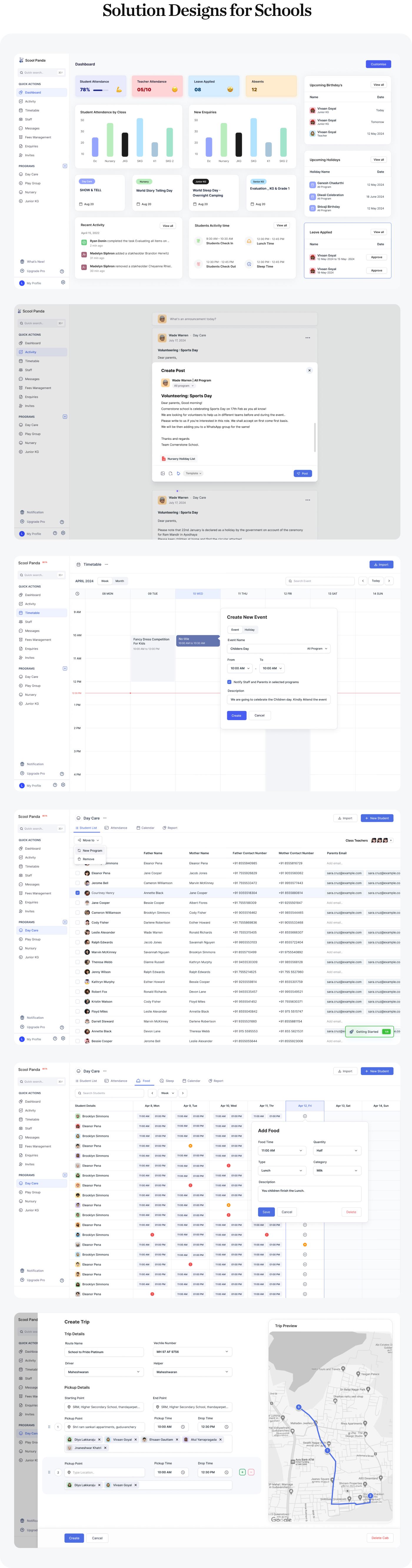
The admin side: attendance dashboards, messaging, timetables, day-care lists, and trip creation, all in one place.
teacher app
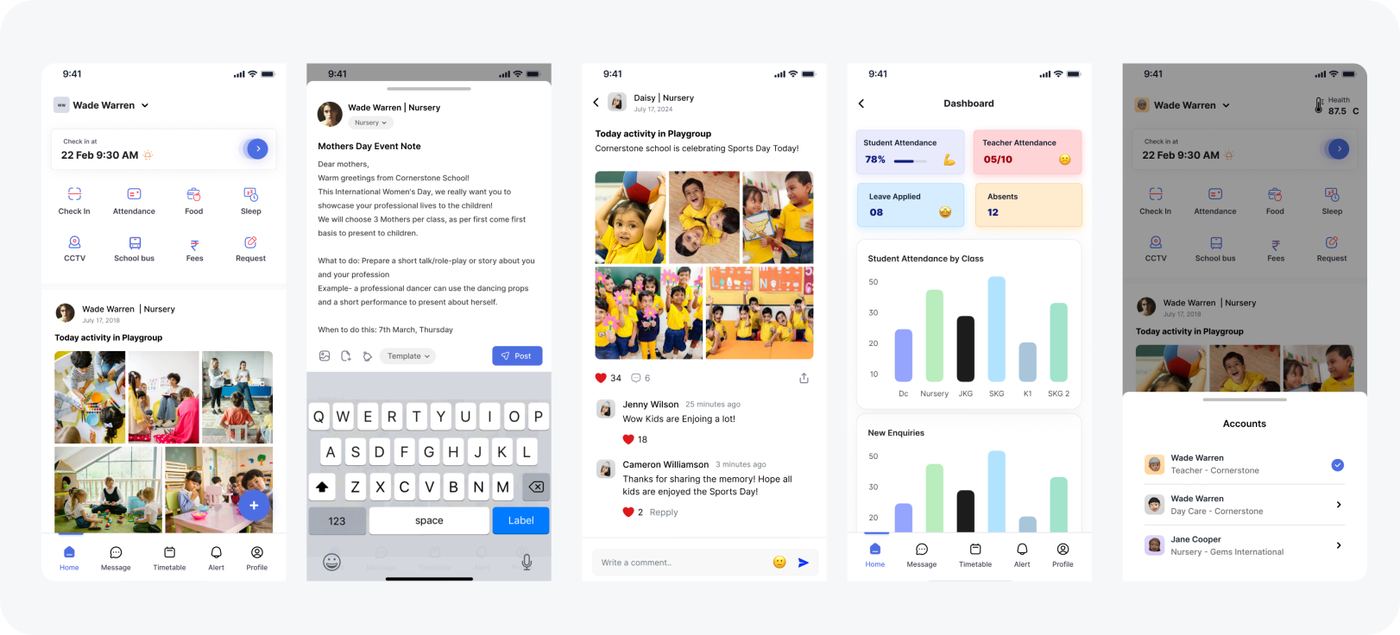
Teachers post daily activity updates with photos, send event notes, and see the same attendance analytics admins do.
Outcome
The honest one
We didn't succeed selling into India. Indian school administrations move slowly on new tools even when the problem is real, because the people approving the decision are business people weighing their own priorities first.
Reflection
Validation doesn't guarantee adoption. Fifty schools agreeing the problem is real doesn't mean fifty schools are ready to change how they work - I ask about willingness to adopt much earlier now.