Turning a static sales dashboard into Zoho CRM’s configurable motivation system.
A vague redesign request became an enterprise product model connecting live CRM activity to configurable rules, targets, team games, achievements, and workplace dashboards.
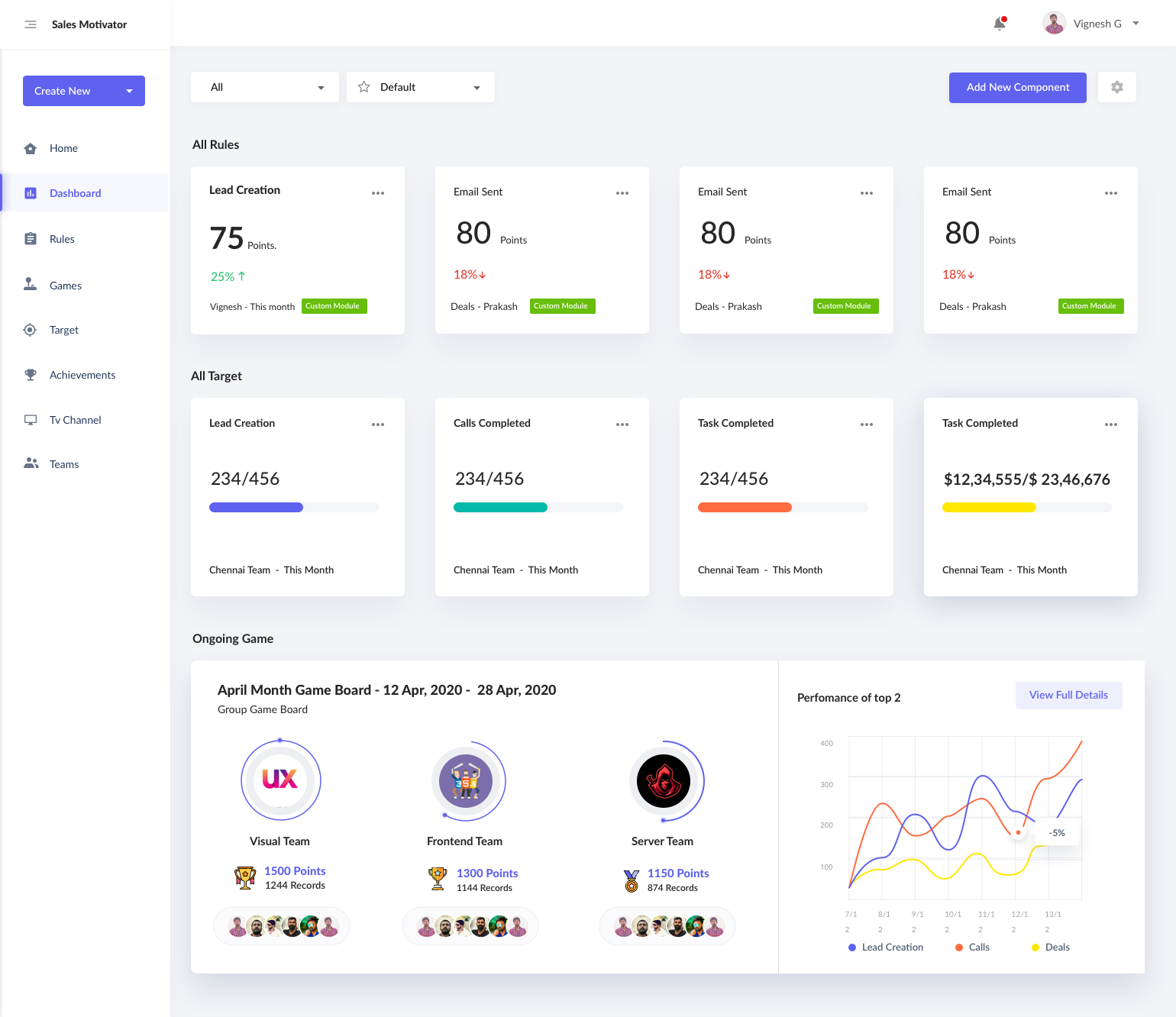
A ten-year-old product needed to become useful again.
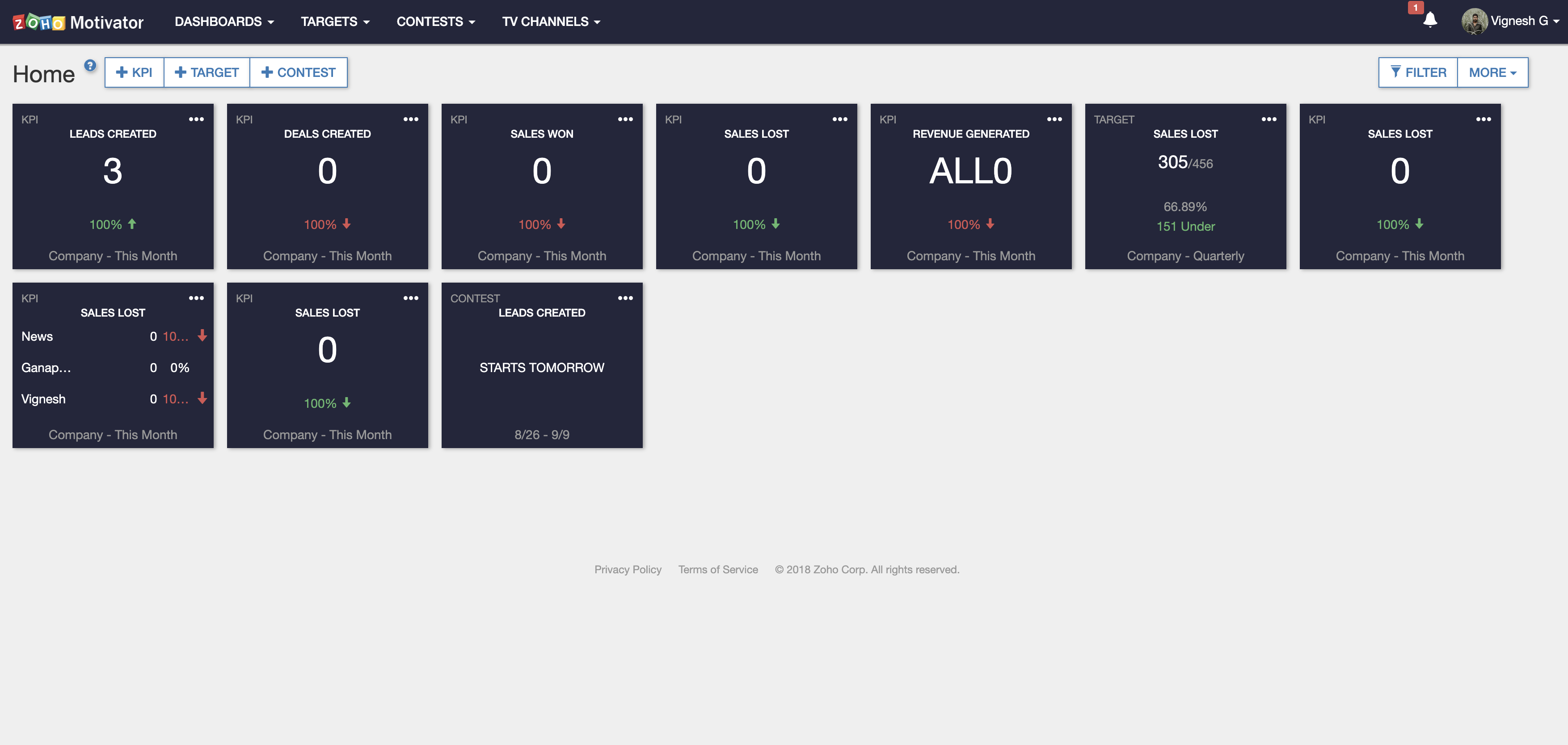
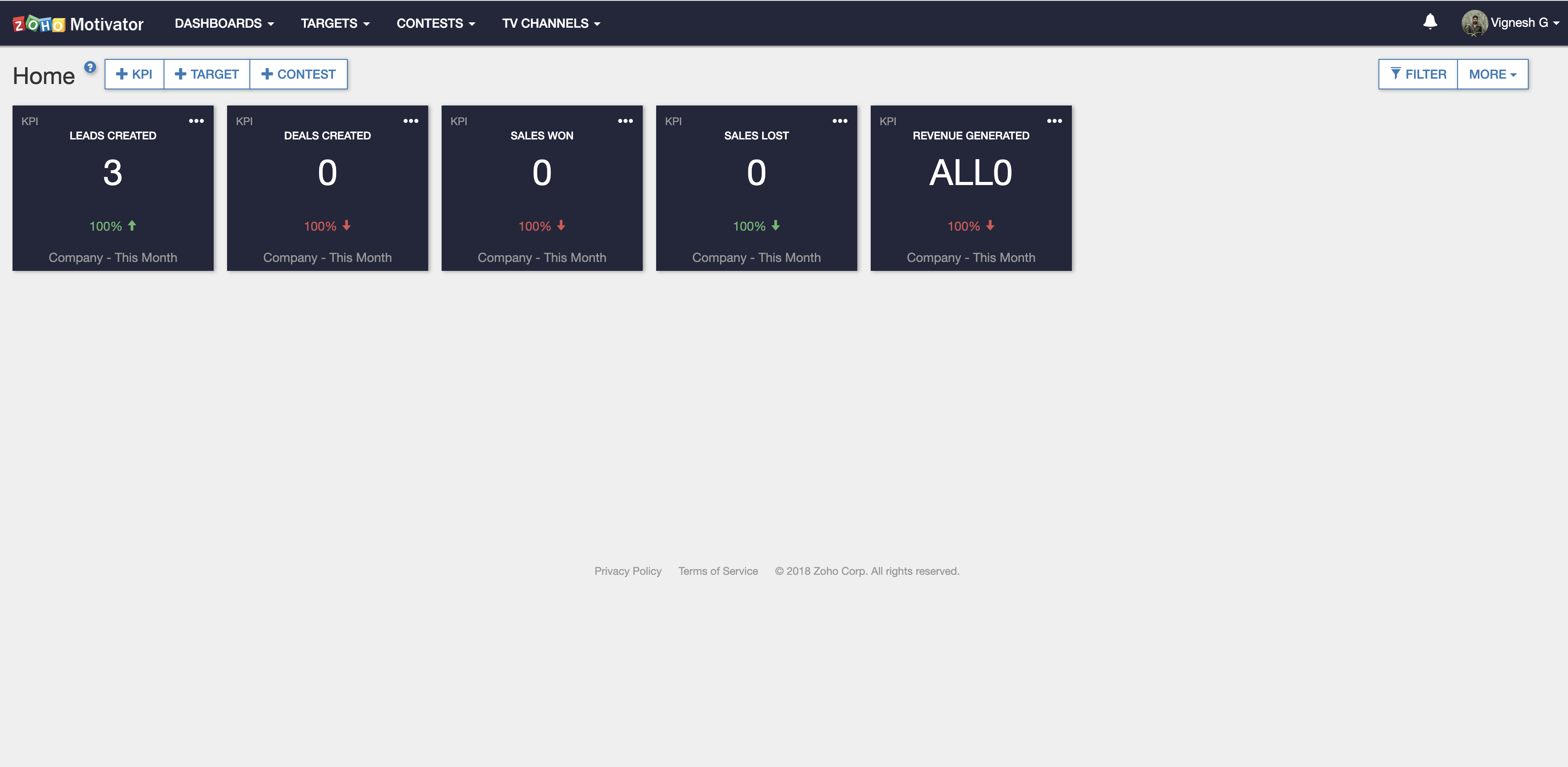
Sales Motivator was a standalone gamification product within the Zoho CRM ecosystem. Its dashboard displayed fixed KPIs, targets, and contests, but the underlying model could not adapt to how different organisations measured sales performance.
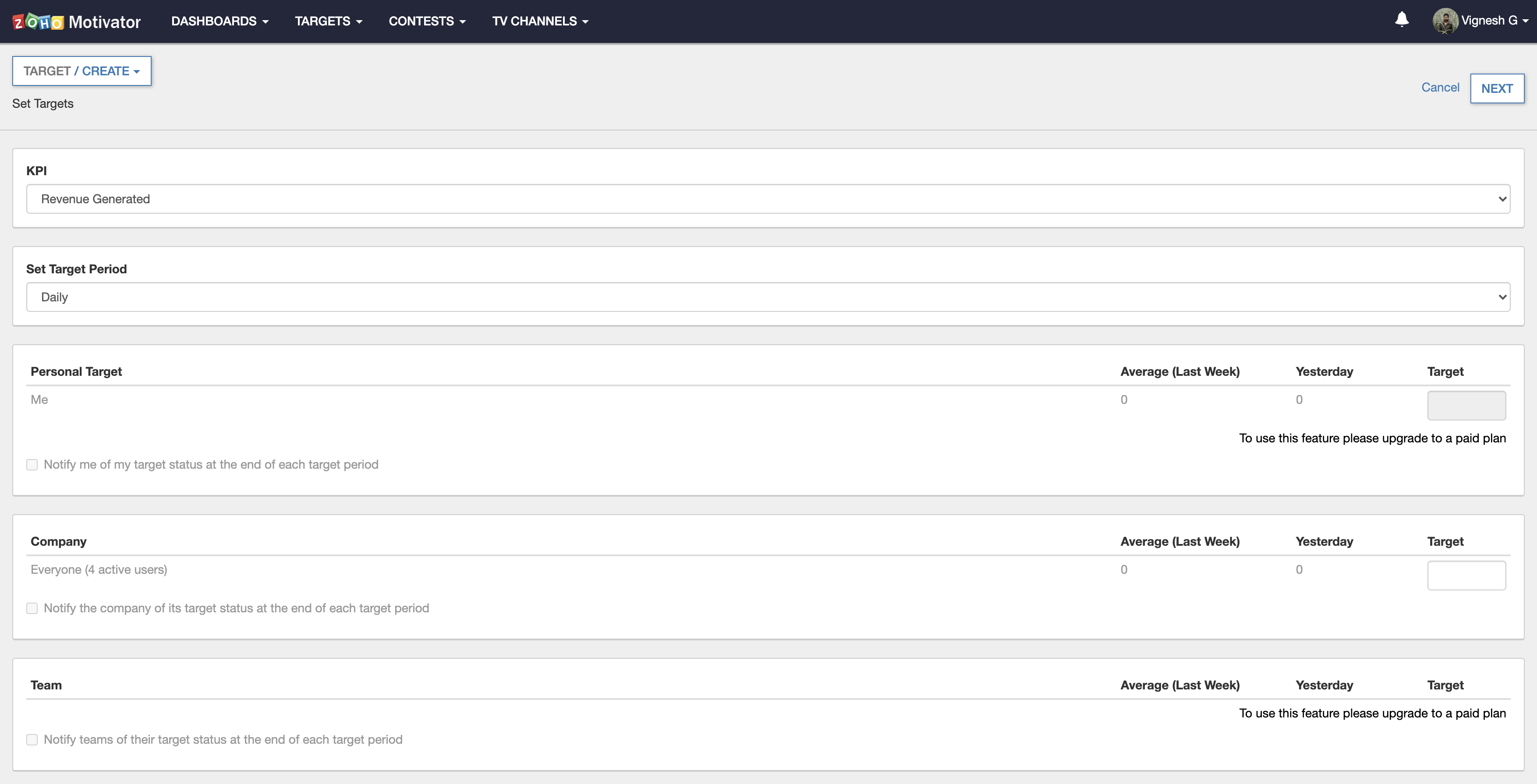
The request was simple: modernise the dashboard for waiting customers.
A product manager approached me with an old, static experience and a small group of companies ready to use an improved version. Because I had already spent two years working across Zoho’s workflow, automation, and design-system foundations, I saw that a visual refresh would leave the real limitation untouched.
The interface exposed numbers, but not a flexible system.
Managers could add a KPI, target, or contest, yet the setup remained tied to predetermined measures. The product could report activity, but it could not express the different conditions each business used to reward meaningful work.
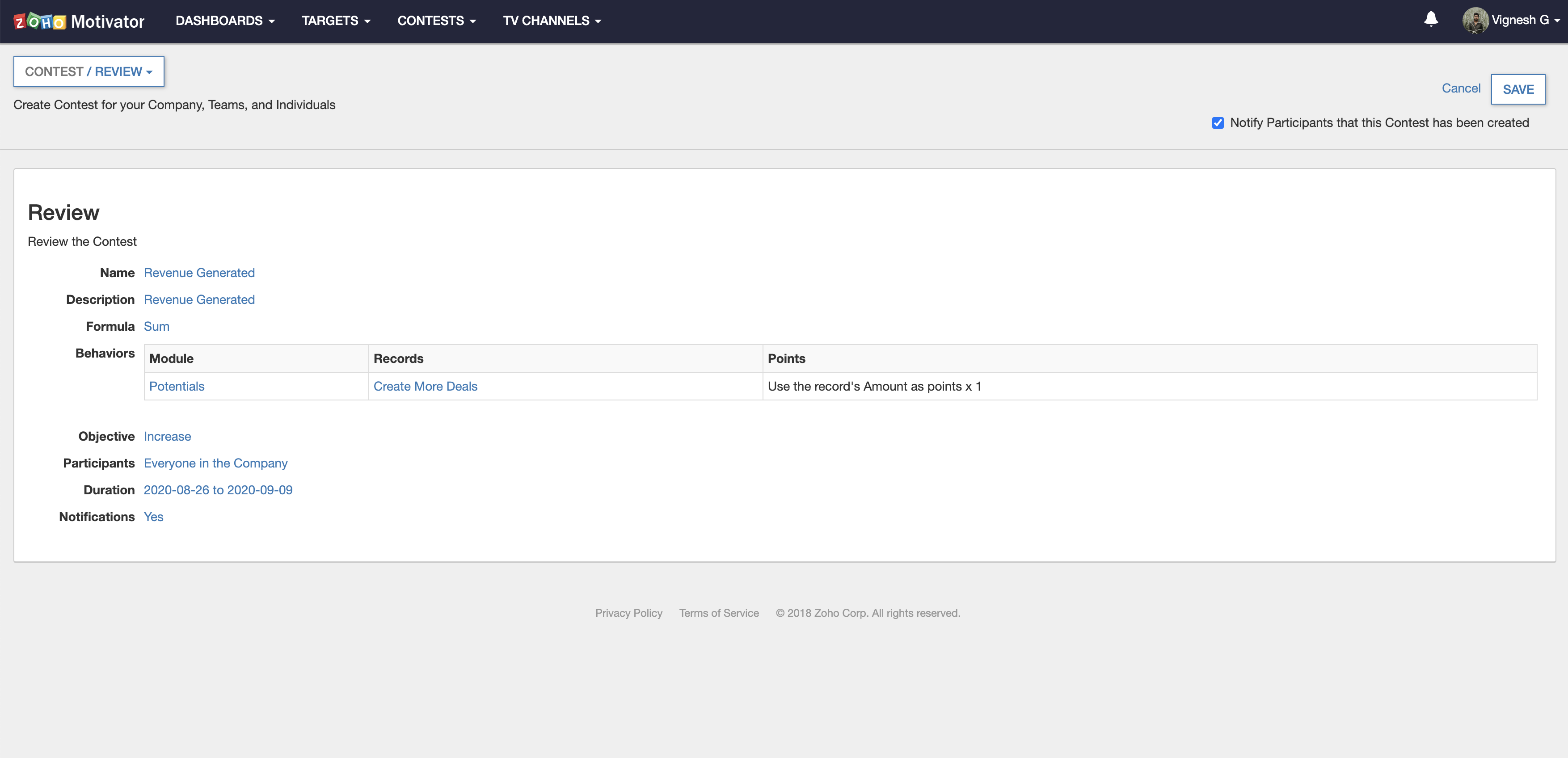
Connect motivation directly to CRM activity, then make the scoring logic configurable.
I proposed two linked changes. First, use live Zoho CRM data as the source of truth. Second, replace fixed point values with a reusable rule engine so each organisation could define what mattered: a high-value deal, a completed call target, a conversion event, or a combination of conditions.
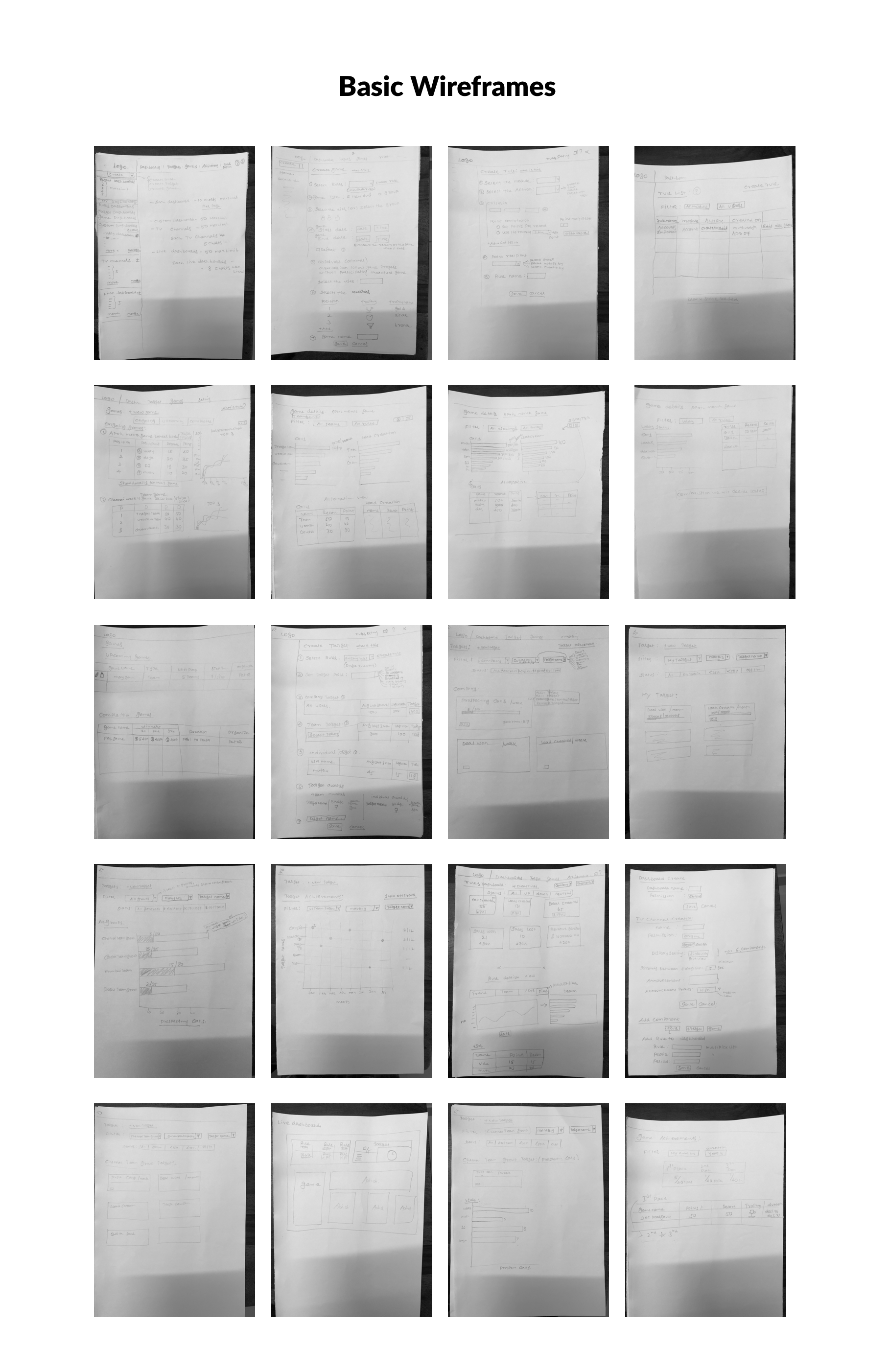
I mapped the whole product before redesigning individual screens.
The early work connected rules, targets, games, teams, achievements, dashboards, and TV displays into one product model. This prevented each surface from developing its own version of scoring logic.
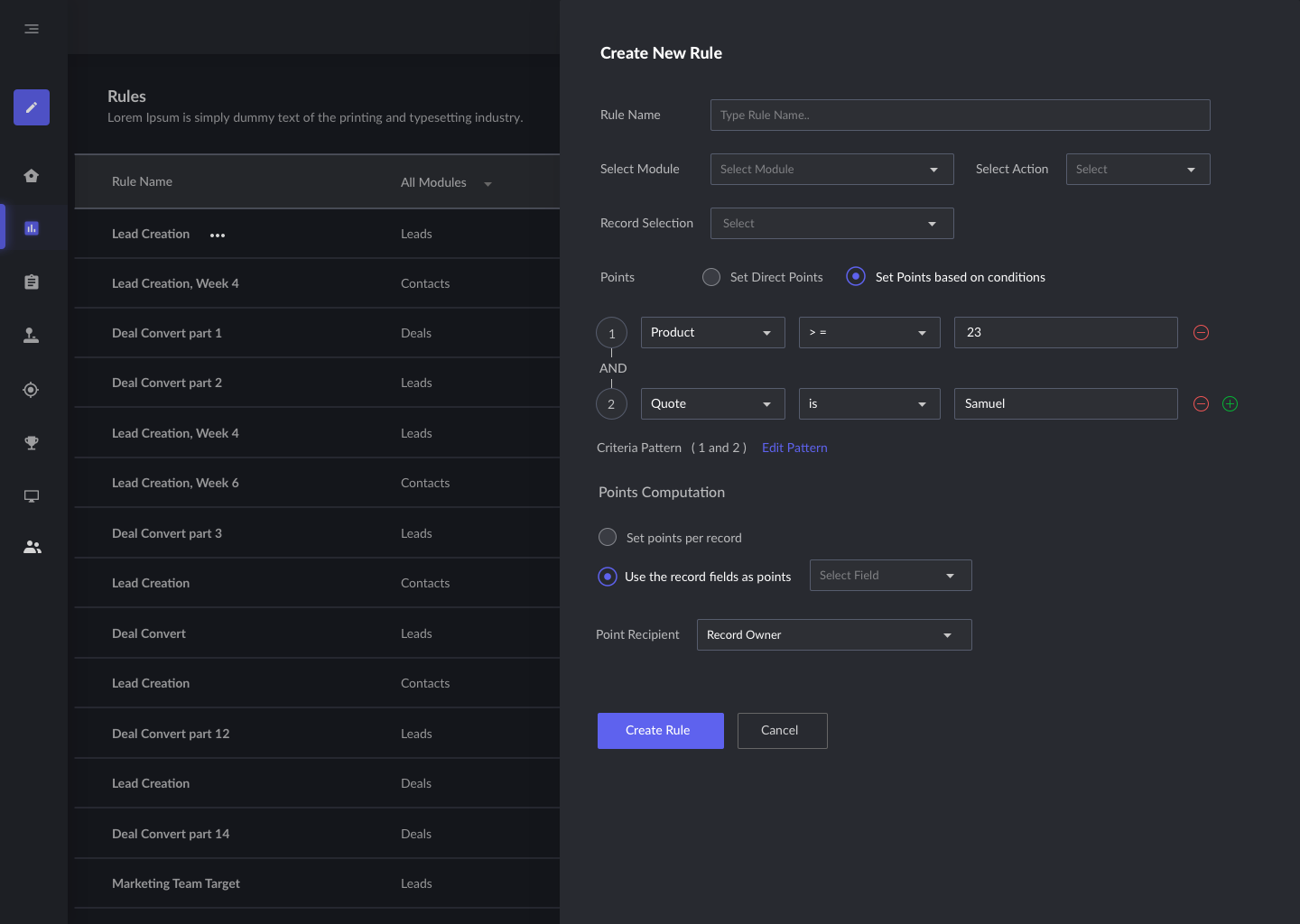
Non-technical managers could describe how work should earn points.
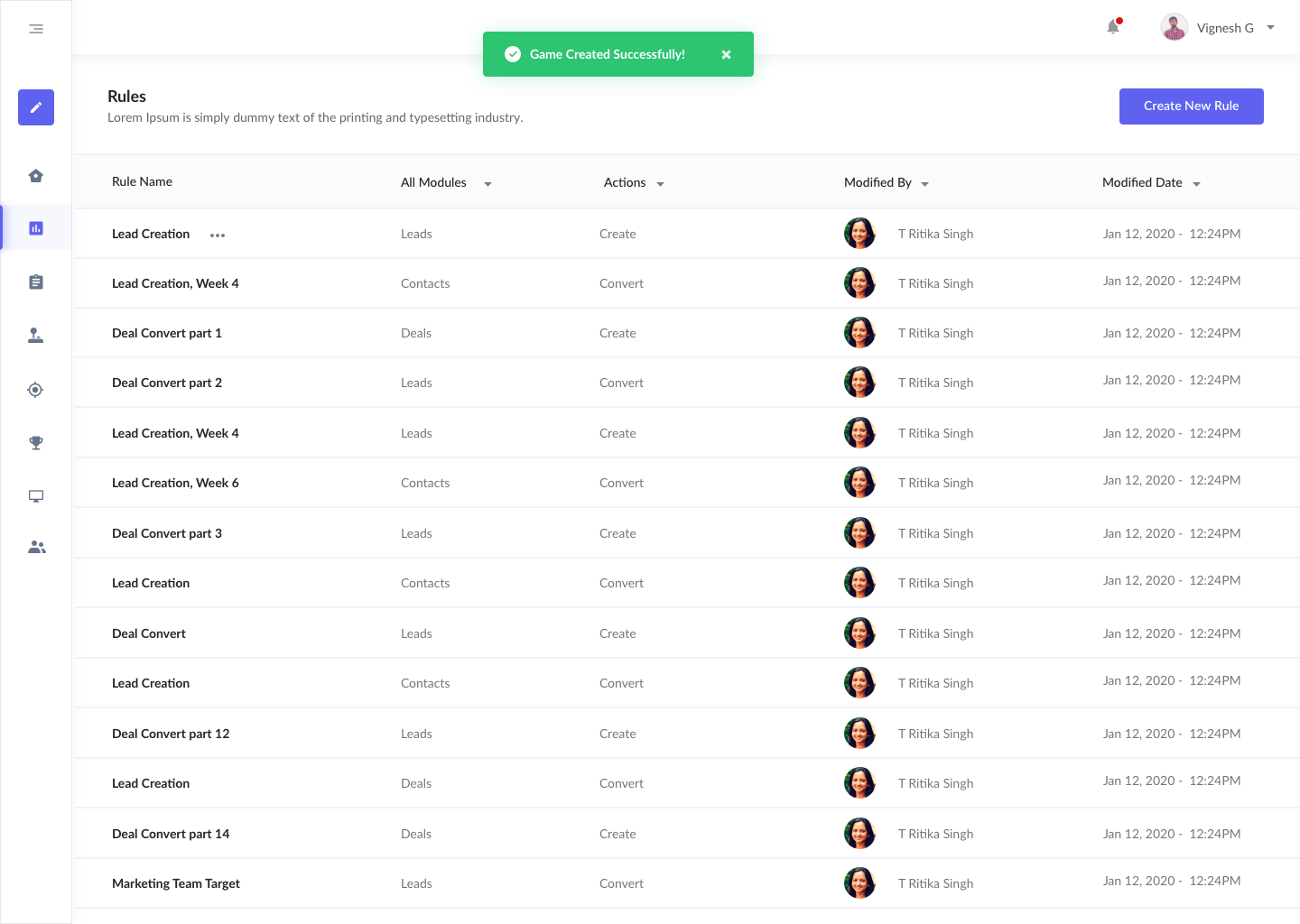
A rule begins with a CRM module and action, then adds criteria using understandable AND/OR conditions. Points can be fixed per record or derived from a record field, allowing the same model to support calls, leads, deals, revenue, and organisation-specific measures.
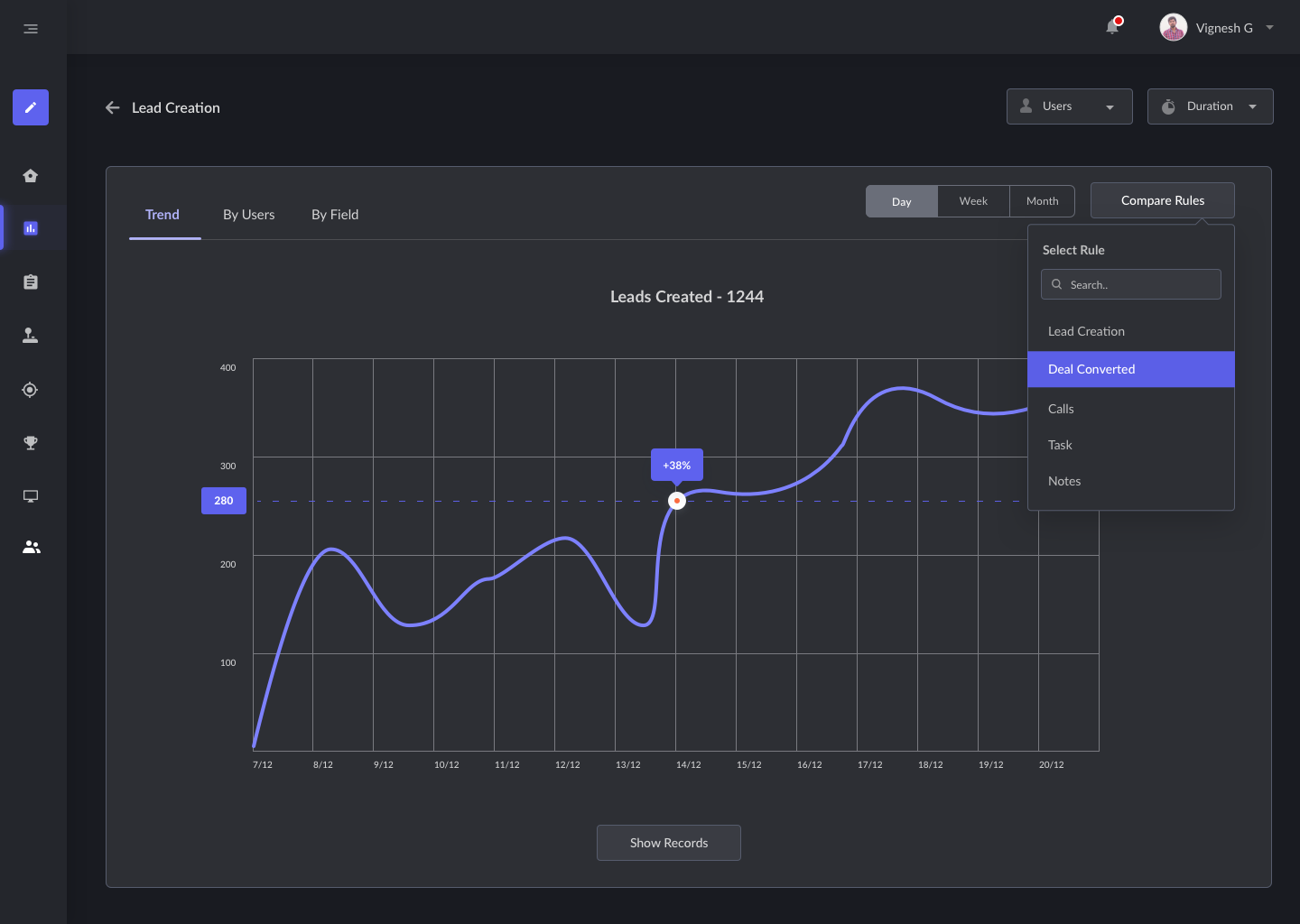
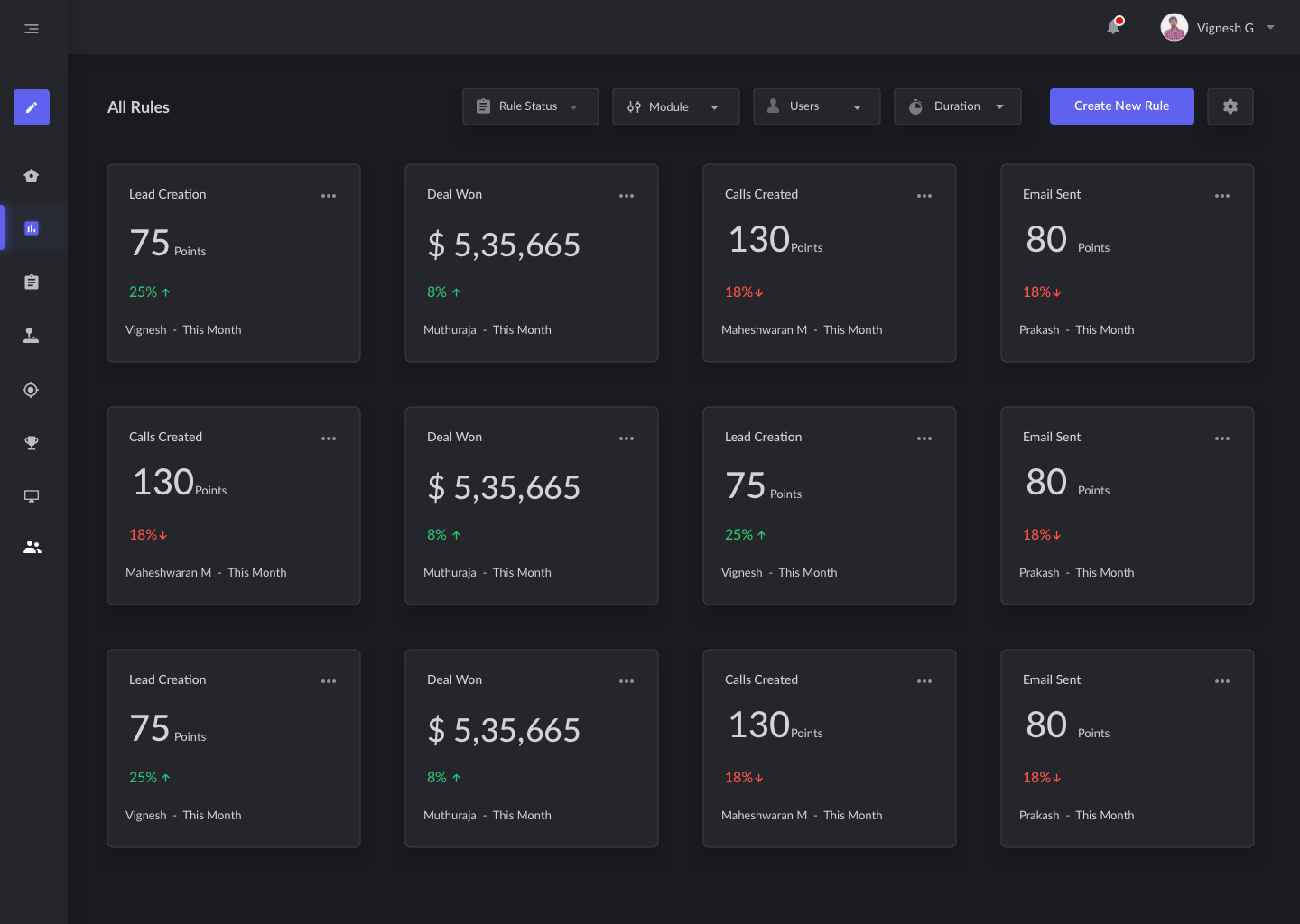
The same logic powered targets, competitions, and recognition.
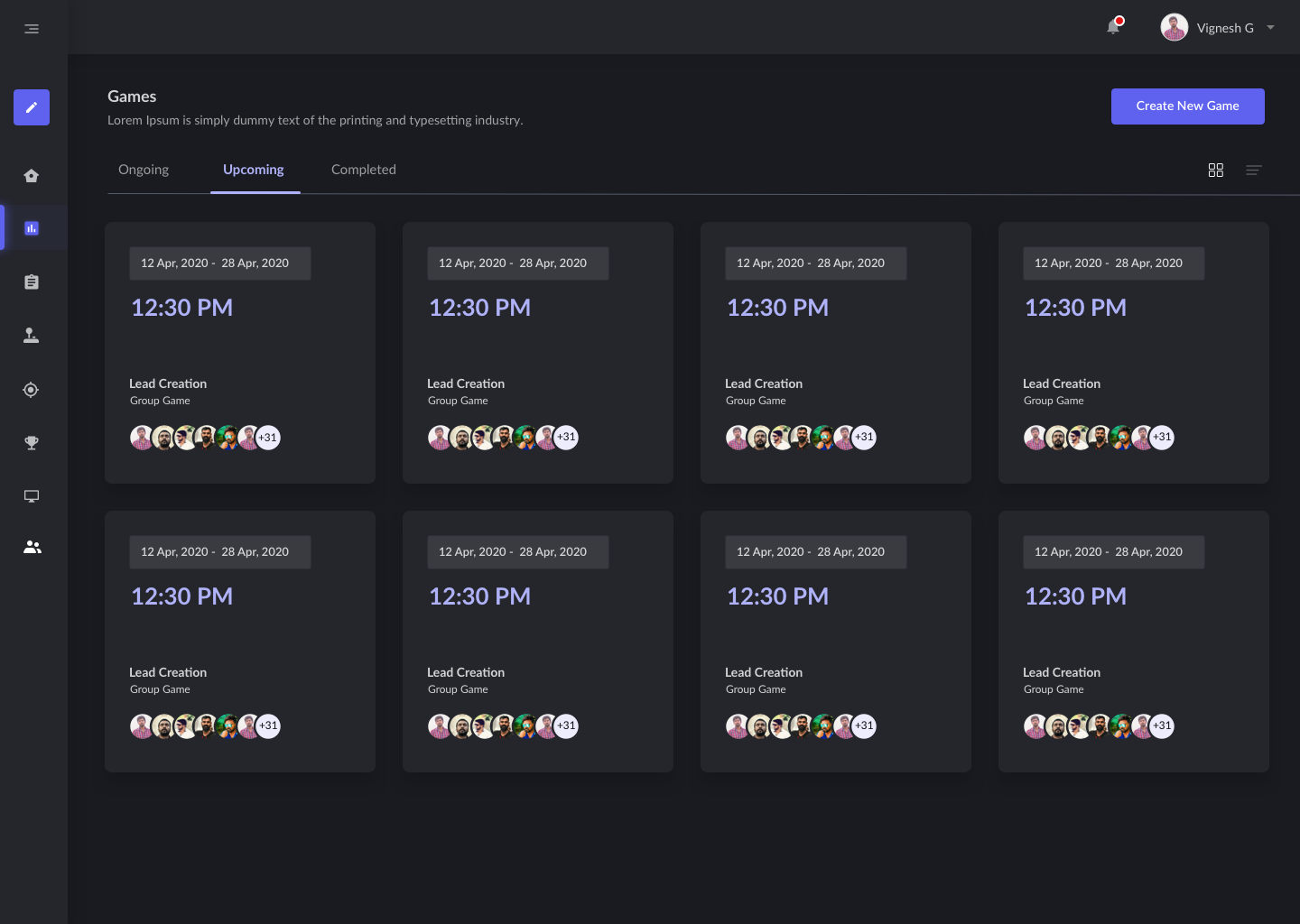
Managers could select an existing rule, create individual or group games, choose participants, set a duration, repeat the game, add observers, and control how results were announced. CRM activity flowed into the experience automatically.
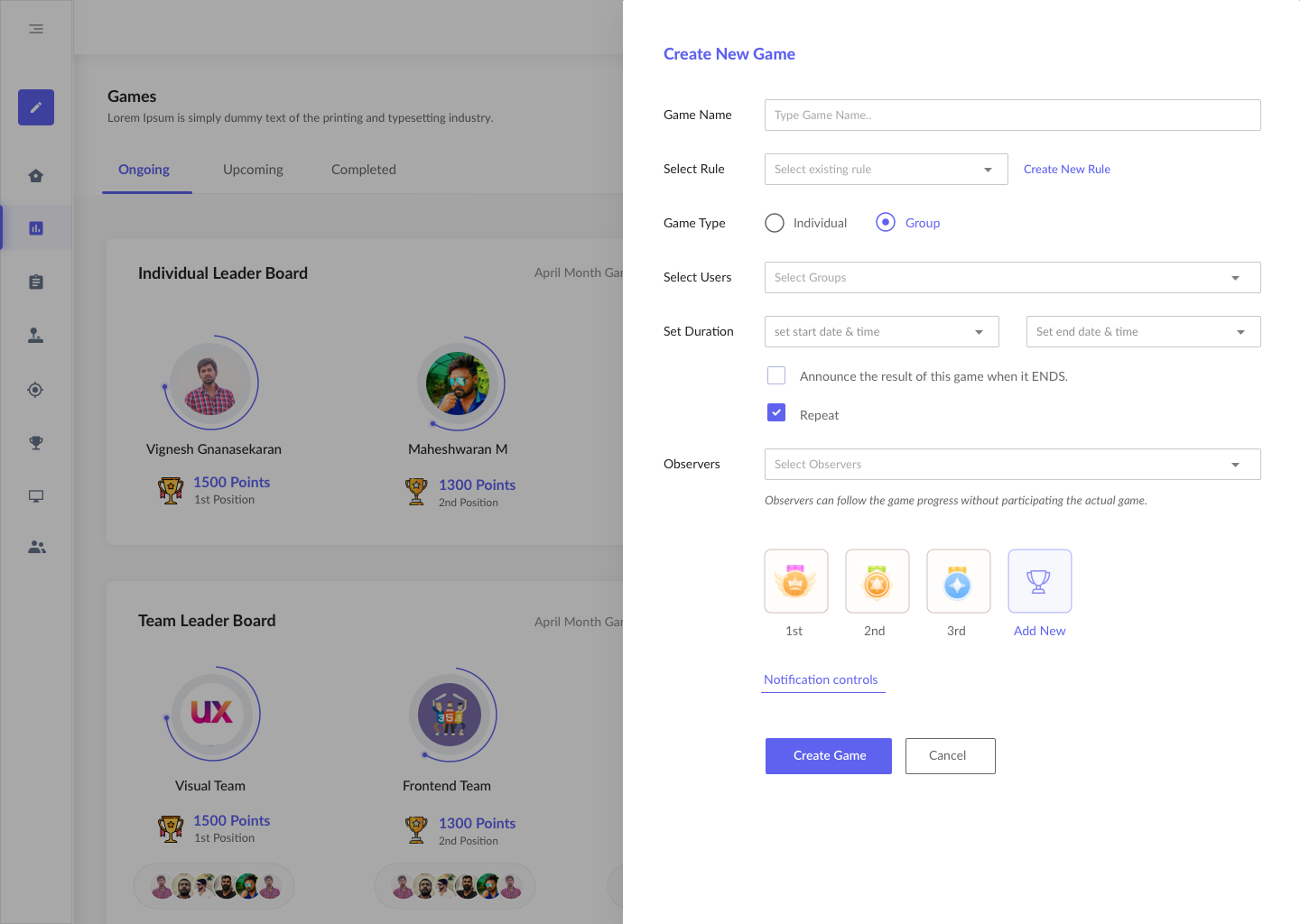
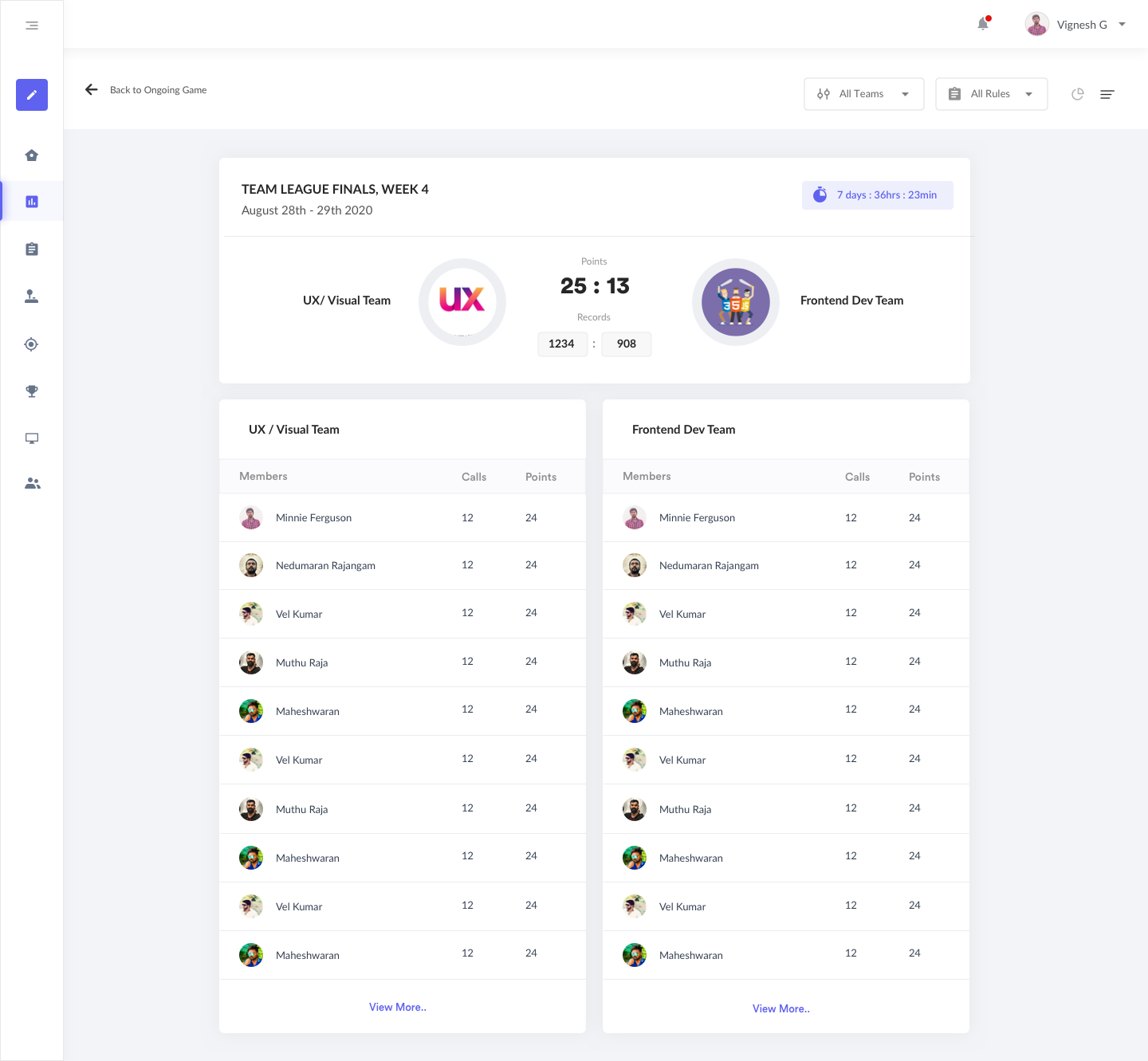
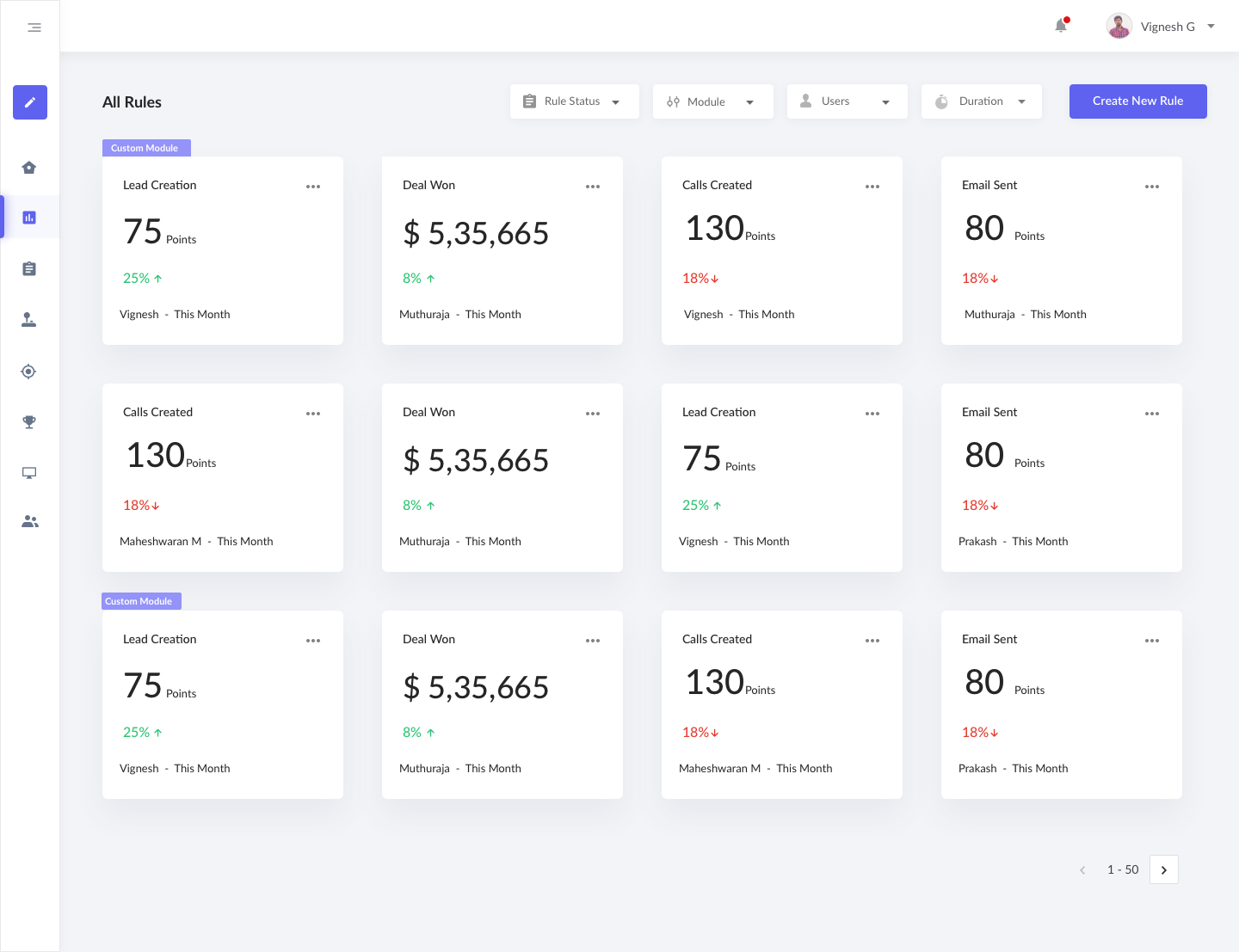
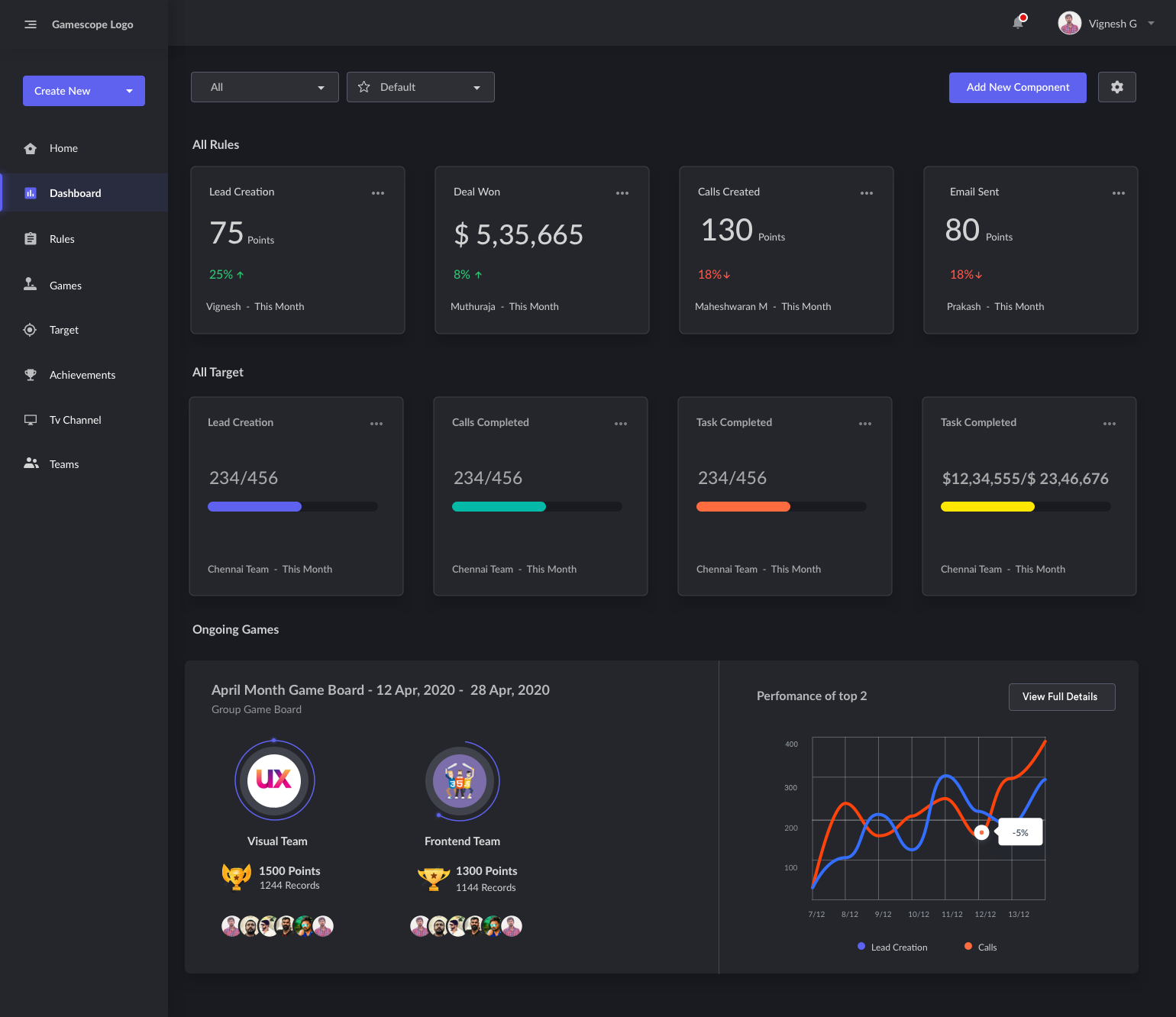
A single dashboard connected configuration to daily participation.
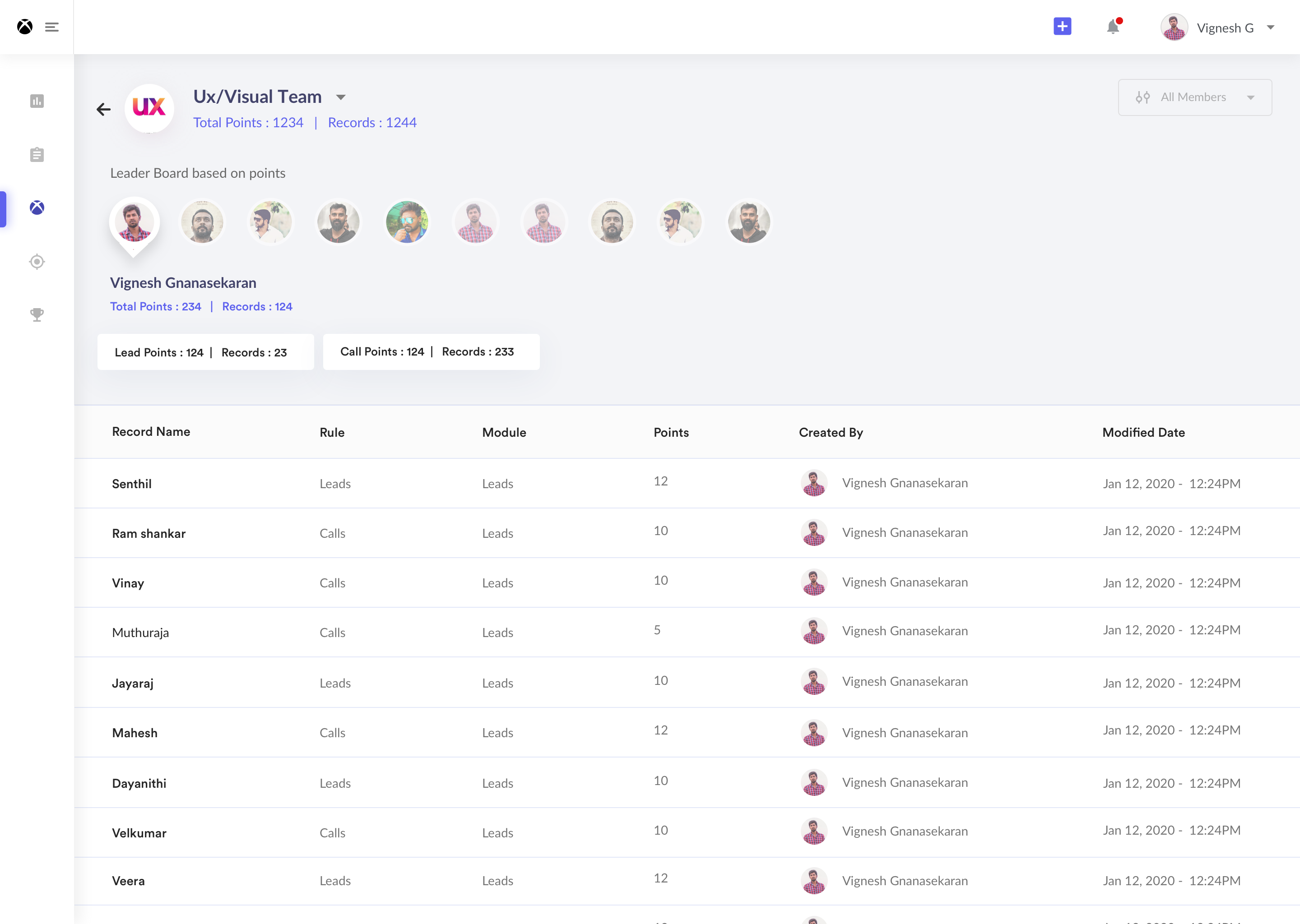
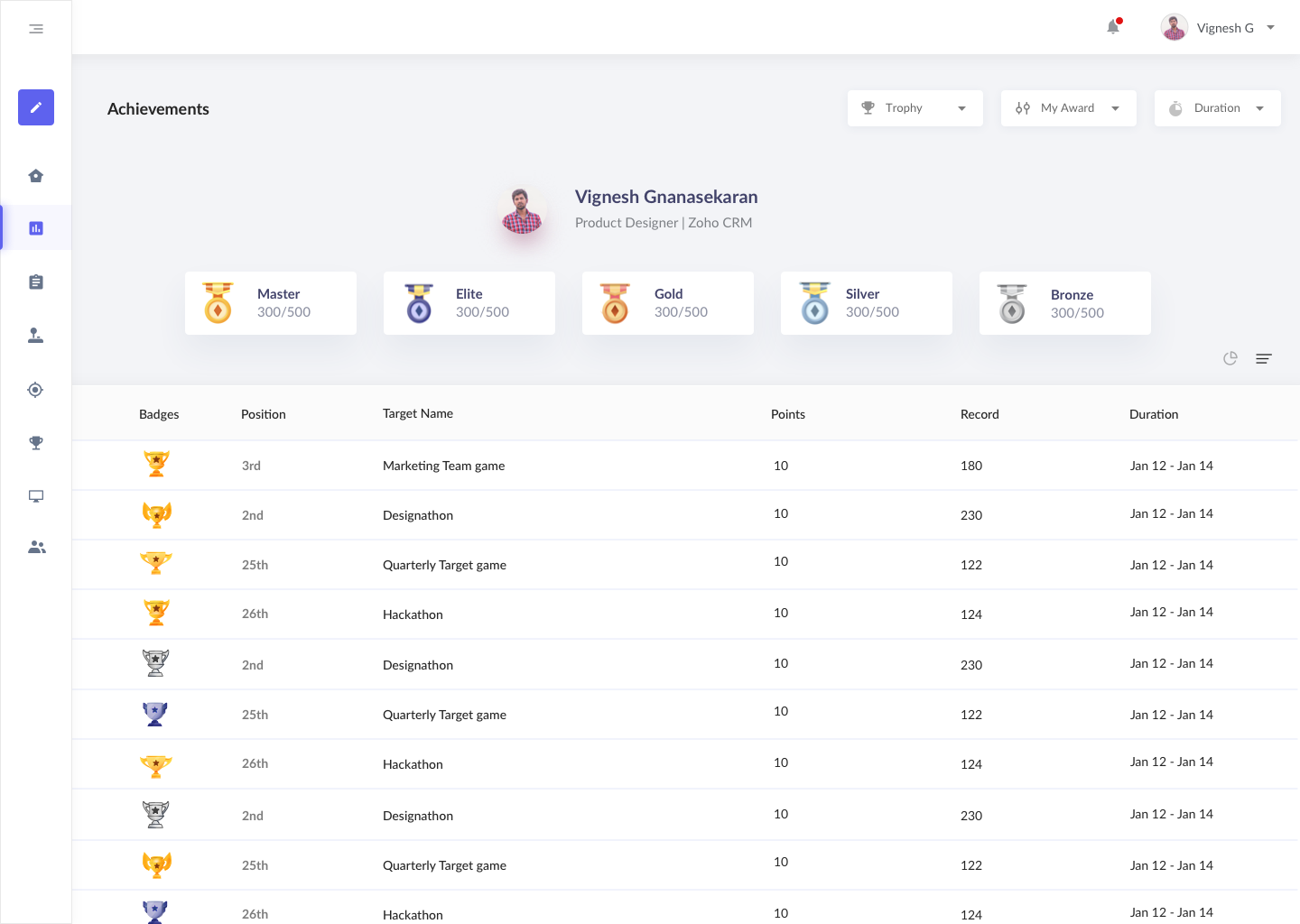
Rules and targets gave managers control; ongoing games, leaderboards, achievements, and TV channels made progress visible to teams. The system could adapt to different organisations without rebuilding the product for each customer.
I led the product model, interaction design, and delivery as the sole designer.
- Used two years of workflow, automation, and design-system experience to reframe the dashboard request.
- Proposed CRM integration and a configurable rule engine as the foundations of the product.
- Mapped the end-to-end system across rules, targets, games, teams, achievements, dashboards, and TV channels.
- Designed complex criteria and scoring controls for non-technical enterprise administrators.
- Worked across product and engineering to ship and enable the experience for global customers.
The product moved from waiting customers to active adoption.
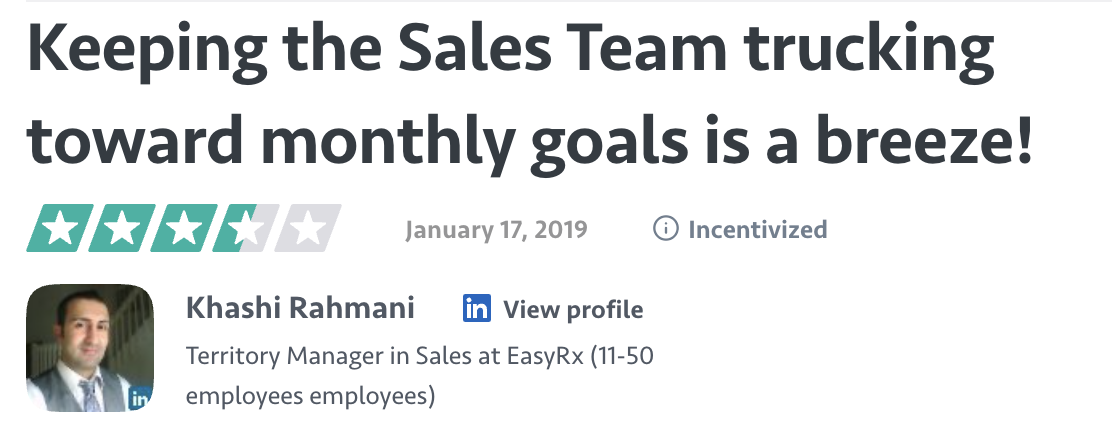
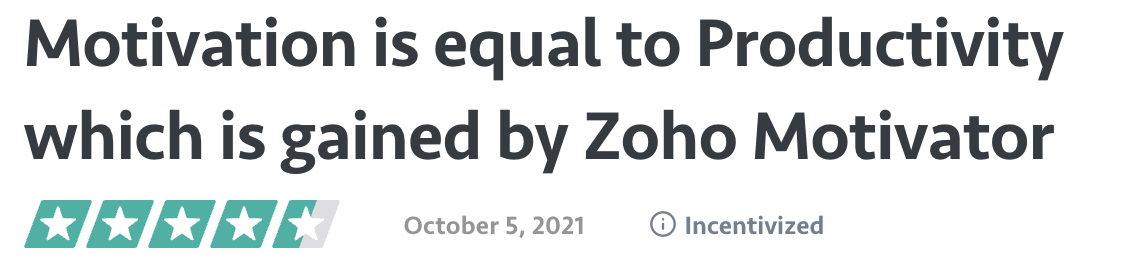
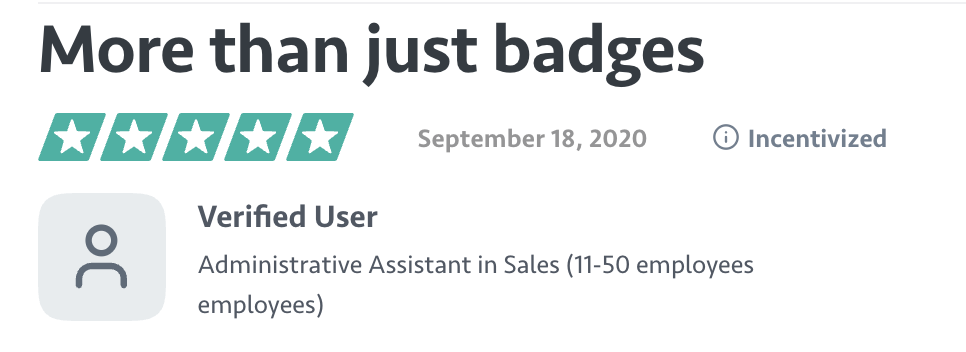
After the public launch, more than 50 organisations enabled Sales Motivator. Usage tracking showed people returning to dashboards and actively participating in the games and targets created from their CRM activity.

A dashboard redesign became a configurable enterprise product.
Sales Motivator launched with CRM-connected scoring, reusable rules, targets, team games, and achievements. More than 50 organisations adopted the product in the first months, reaching over 250,000 users across enabled customer environments.
The highest-leverage design decision was not visual. By making CRM activity and scoring logic reusable, we gave every downstream experience a coherent foundation and gave customers room to define performance in their own terms.