Building Method’s AI copilot for evidence-based UX review.
I built a functional AI review tool because distributed critique varied in rigor and generic AI feedback lacked accessibility depth, product context, and usable reasoning.
Open UX Review Copilot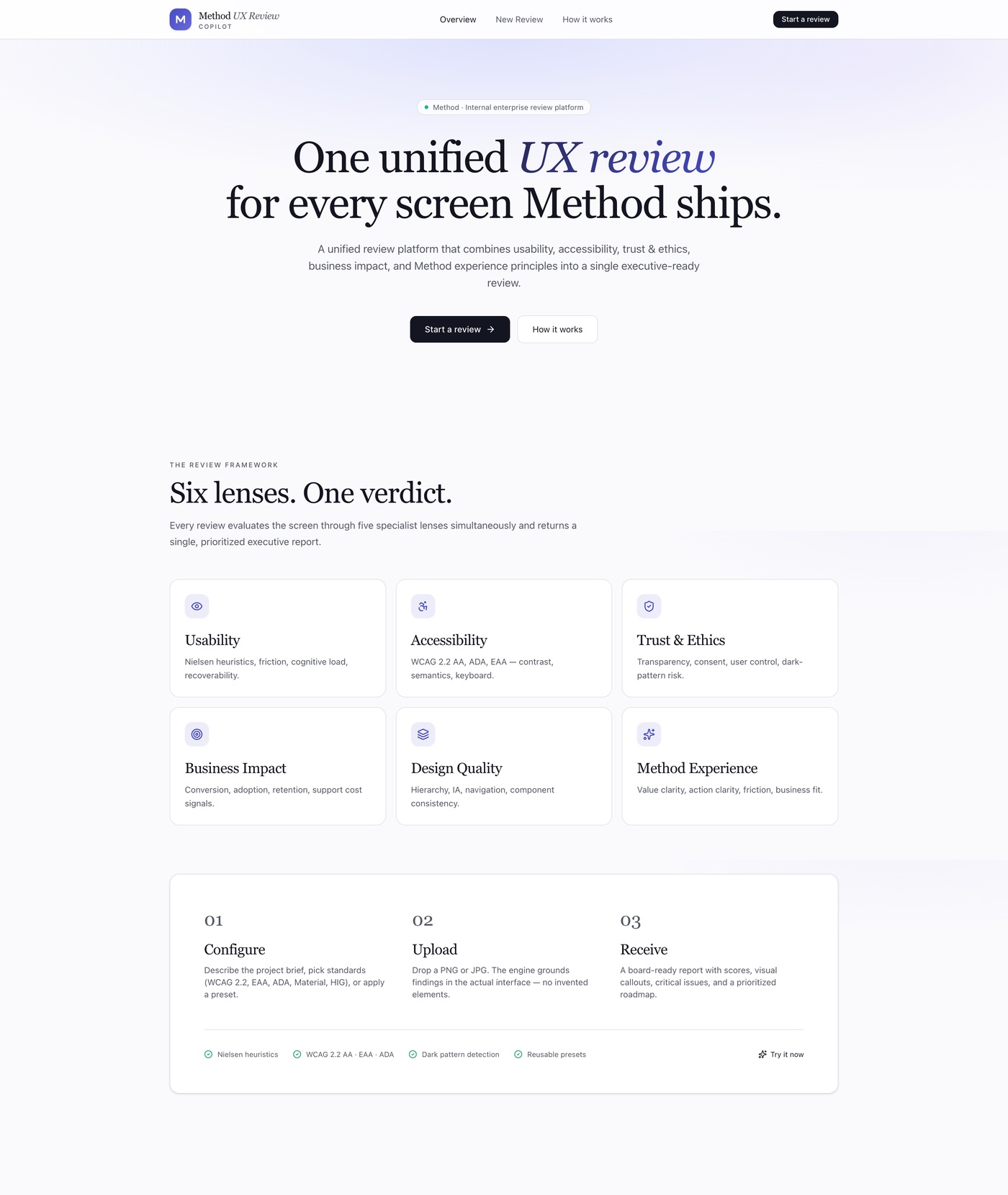
The product and operating context
Designers across time zones often waited for peer feedback before taking work to a client. The quality of critique depended on who was available.
The problem behind the request
There was no repeatable way to assess usability, accessibility, trust, design quality, business impact, and task completion as one coherent review.
Make every AI finding explain its reasoning - and keep a human responsible for the decision.
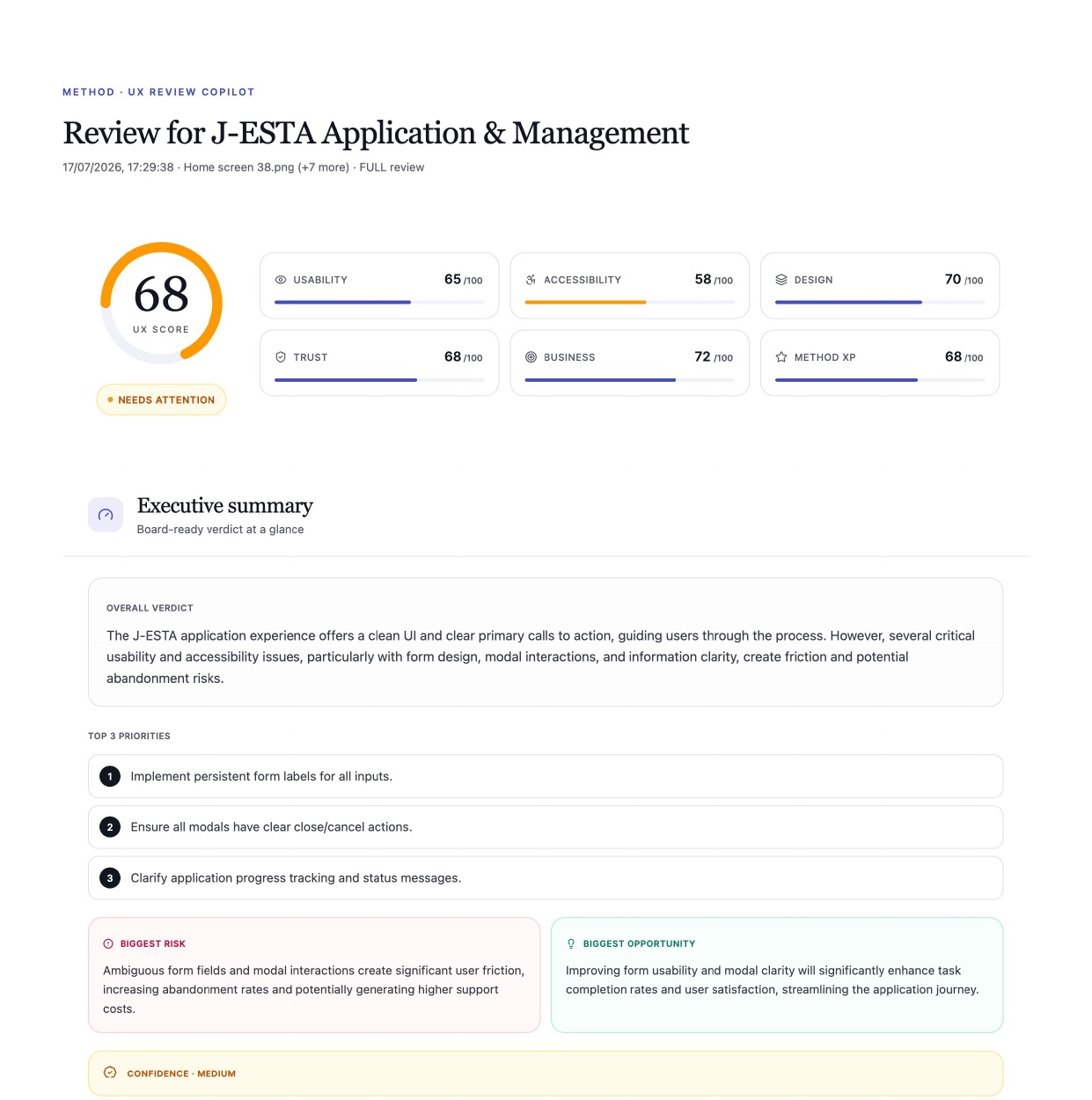
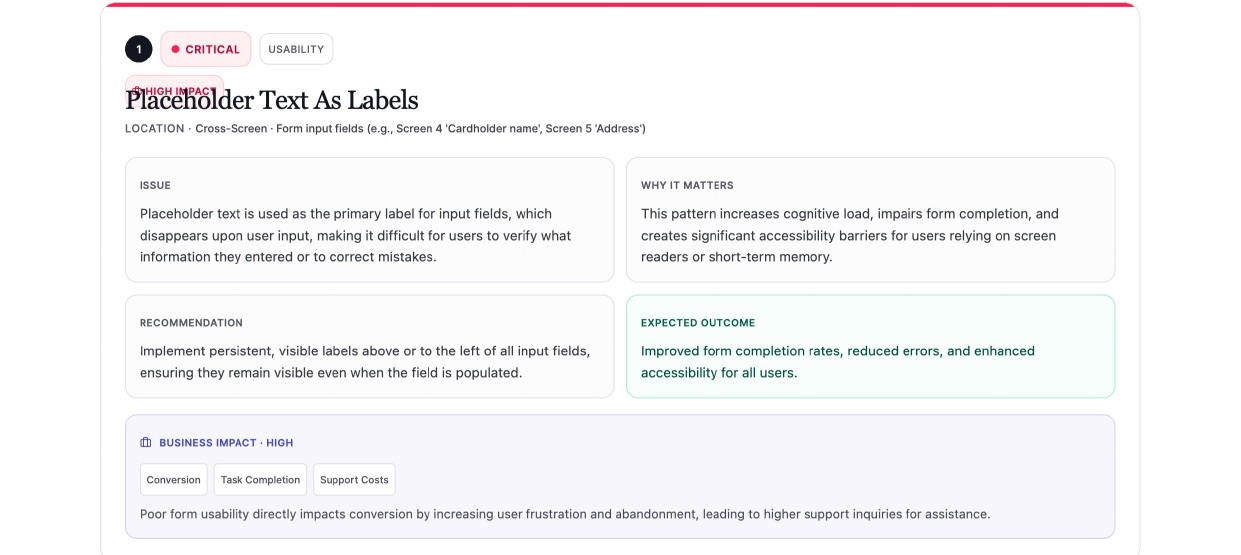
The tool flags rather than approves. Every finding states what is happening, why it matters, who is affected, the applicable standard, and the related business consequence.
From decision to shipped system
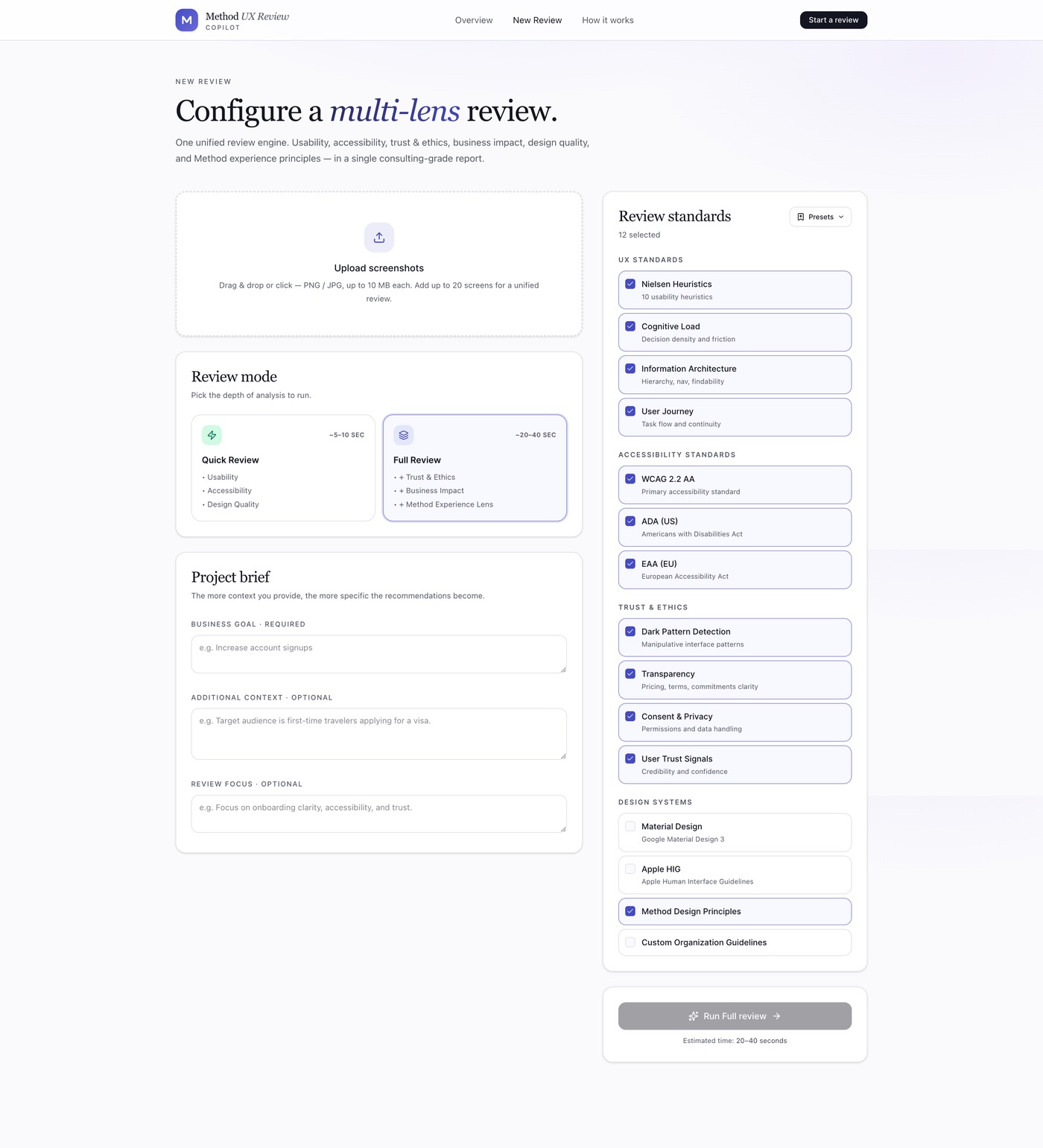
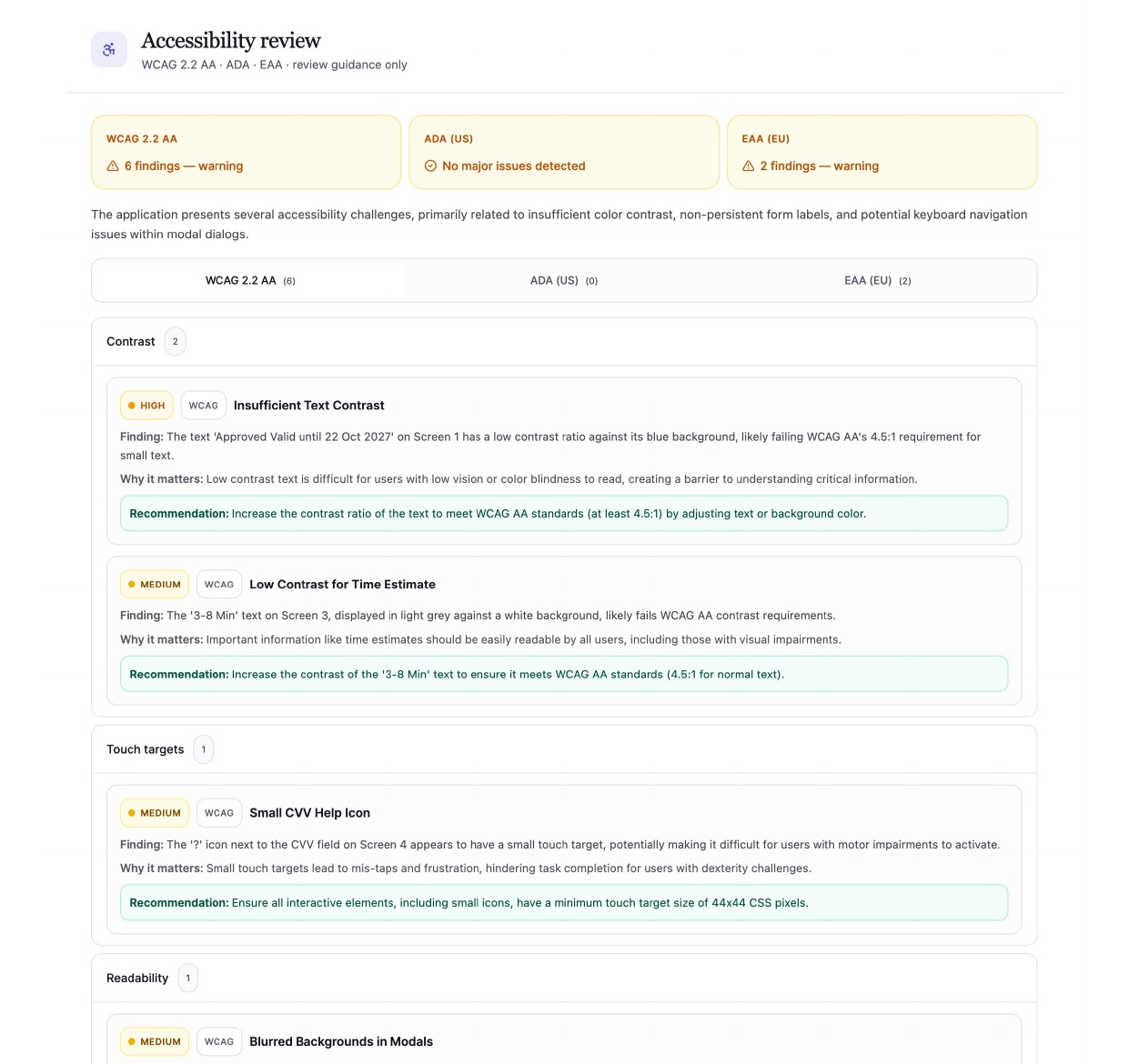
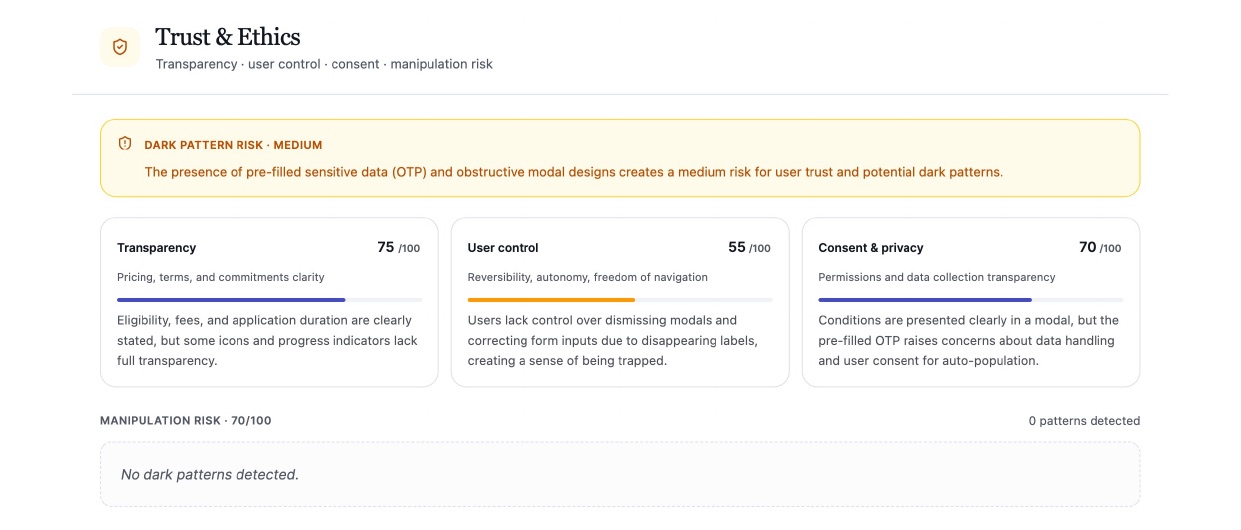
- Designed six complementary lenses and selectable standards including WCAG 2.2, EAA, ADA, Nielsen heuristics, Material, and HIG.
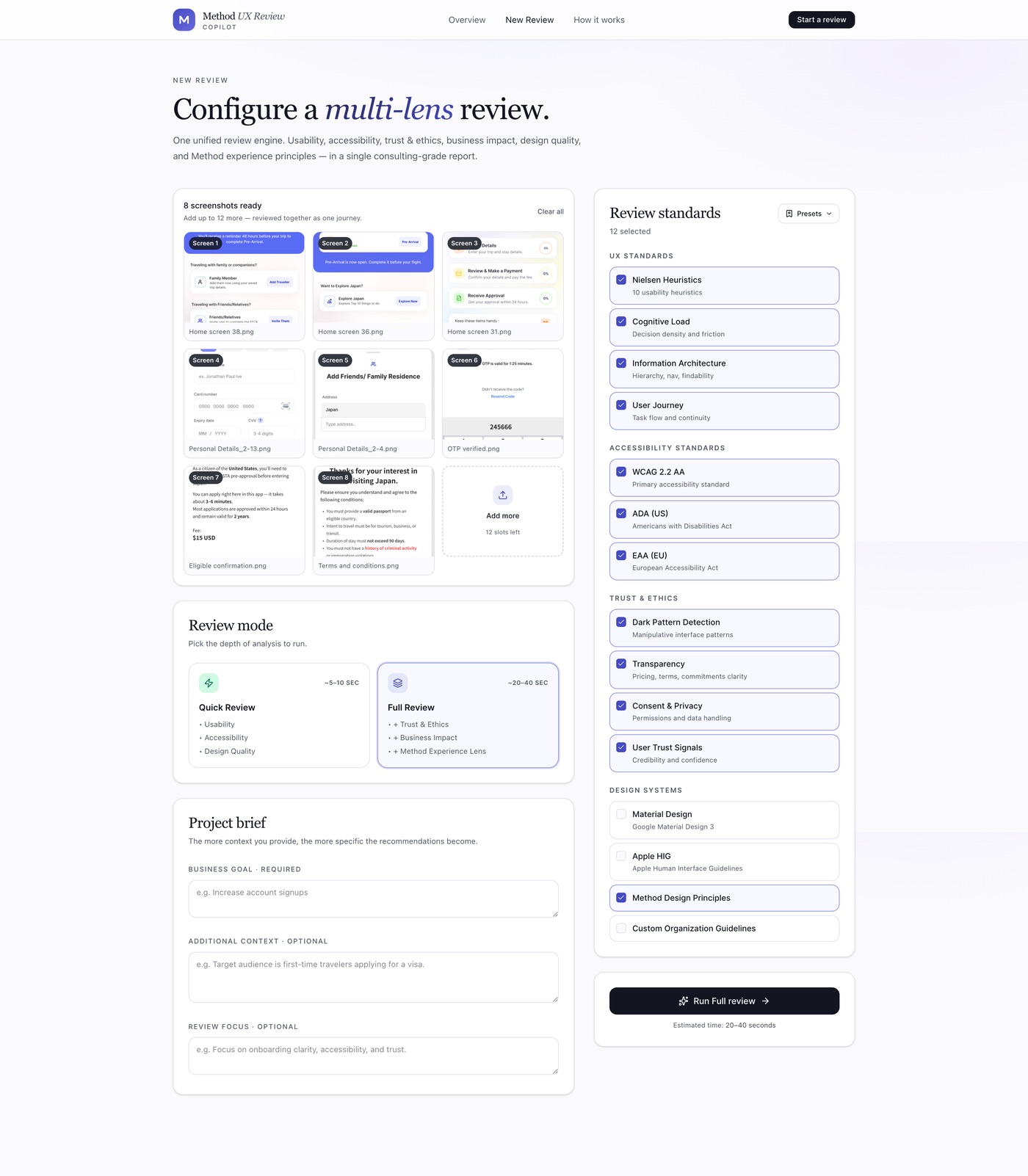
- Supported up to 20 screens as one journey rather than independent screen reviews.
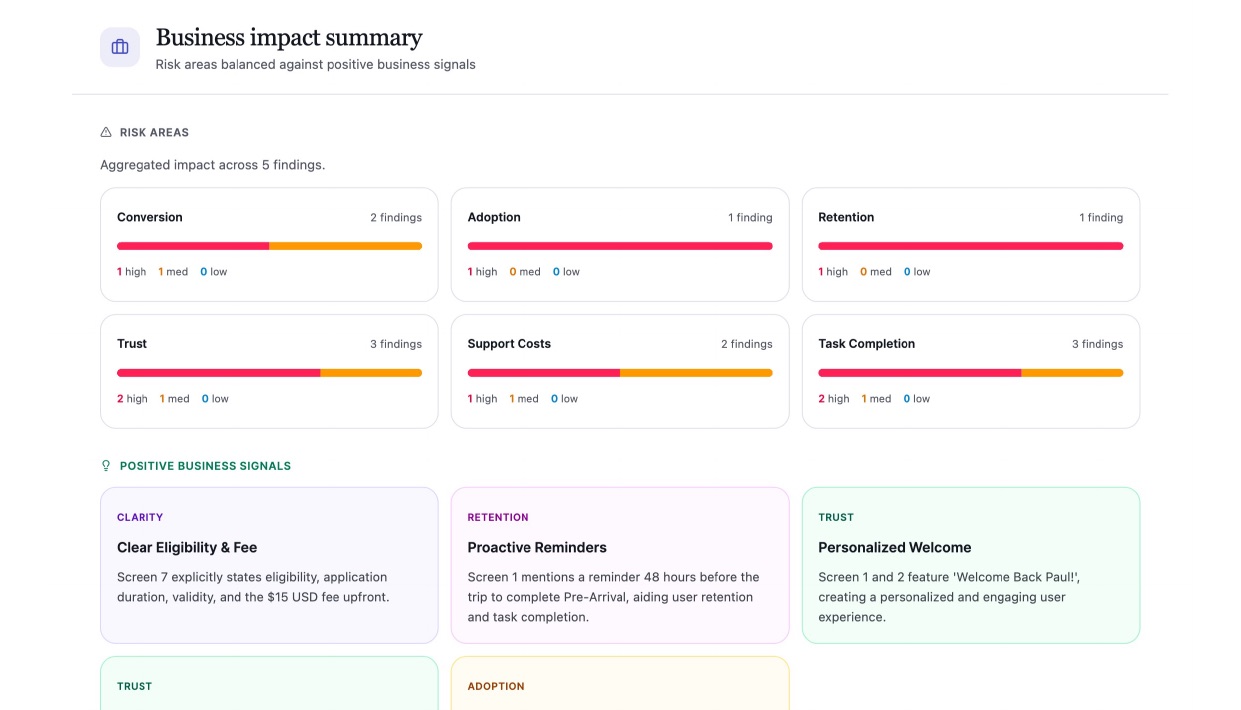
- Balanced critical findings with strengths worth preserving.
- Rolled findings into an effort-and-impact roadmap for client conversations.
The work, in context
Selected full-product views establish the system. Focused frames show the decisions and interactions that made the direction real.
What changed
More than 20 designers began using the tool before client reviews. The meaningful result was behavior change: designers could validate on their own timeline without treating AI as a gate.
AI is useful when it expands investigation and makes evidence easier to interrogate. It should not obscure provenance or replace design judgment.