Reimagining Japan immigration with a reusable digital travel ID.
J‑ESTA modernizes how travelers from 71 visa-exempt countries get cleared to enter Japan. My proposal moved beyond form filling toward a reusable digital travel credential.
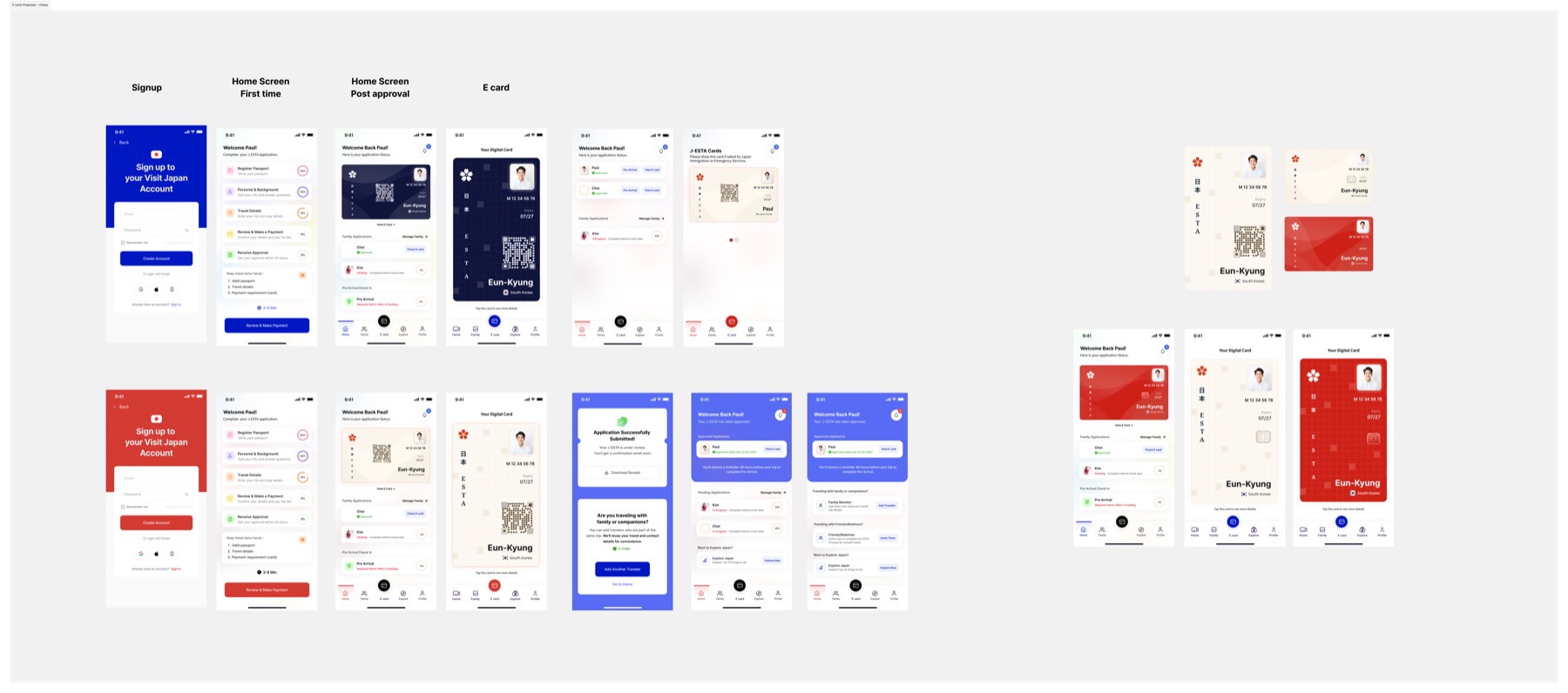
The product and operating context
Japan is developing a digital pre-clearance system modeled on the US ESTA. The proposal needed to feel credible within an existing government identity and accommodate family travel.
The problem behind the request
The current process repeats data for every family member and leaves travelers with no useful digital identity after approval. They still depend on physical paperwork and passports for verification.
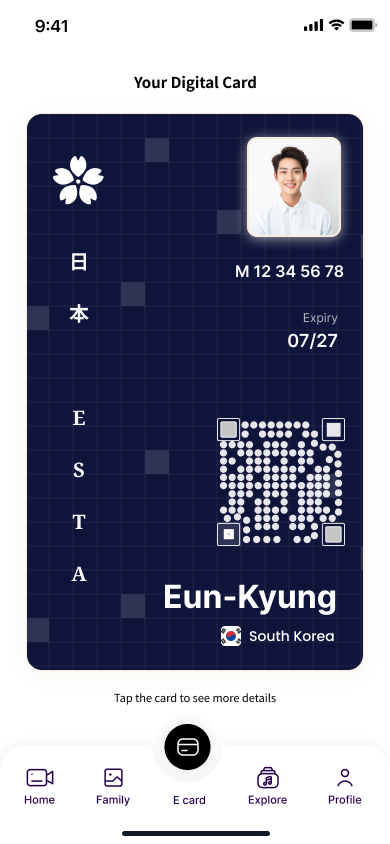
Turn approval into a persistent E‑Card, not another confirmation screen.
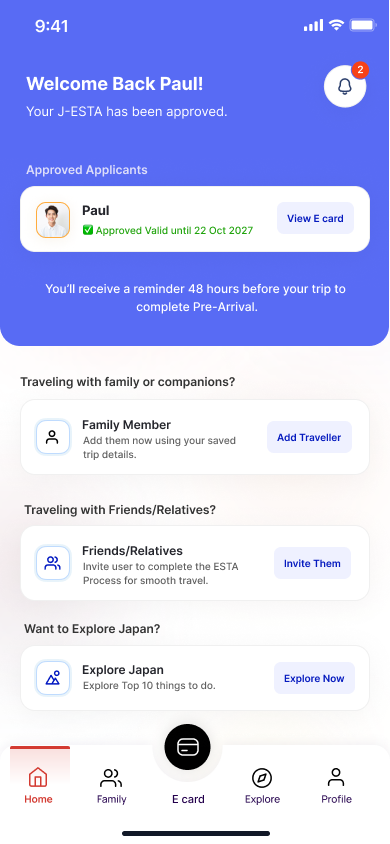
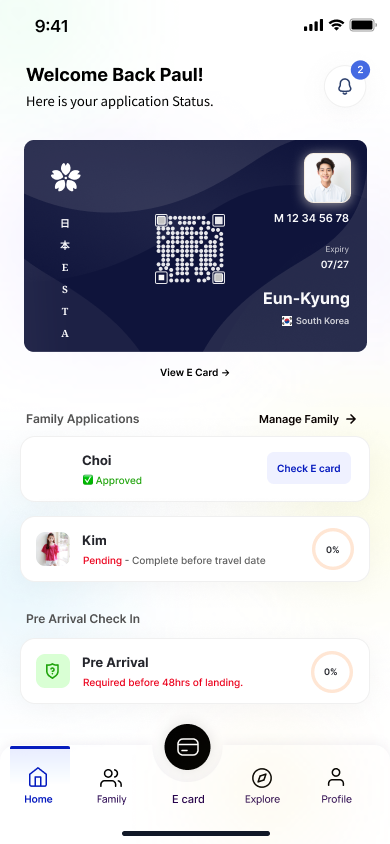
The E‑Card lets travelers verify identity with local authorities, renew an application, and manage family records from one credential. Shared address and communication data removes repeated entry across a group.
From decision to shipped system
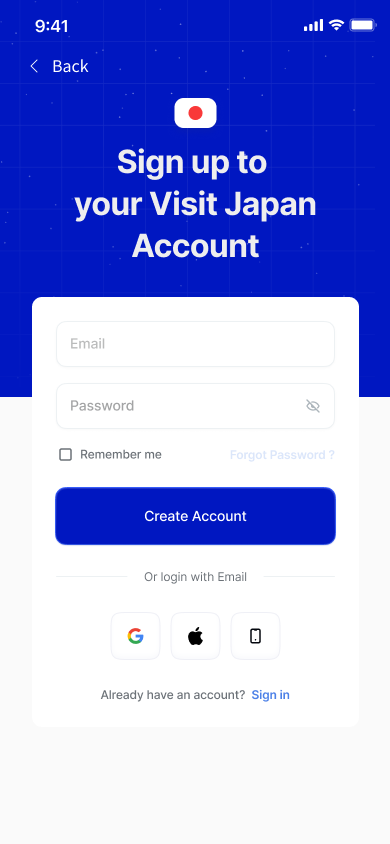
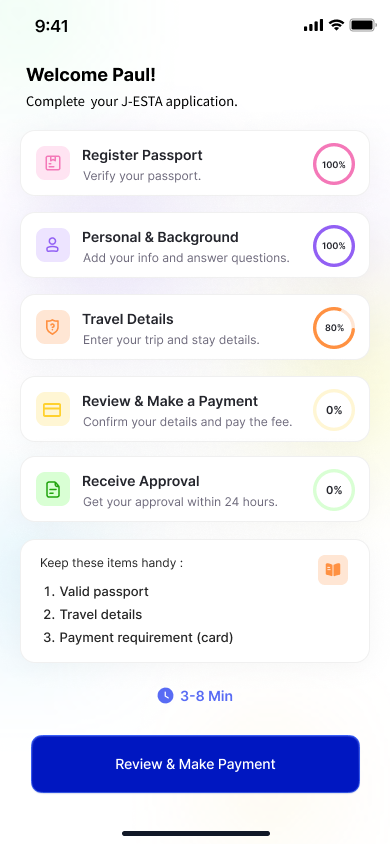
- Designed the full journey from eligibility and account creation through passport capture, payment, approval, and E‑Card use.
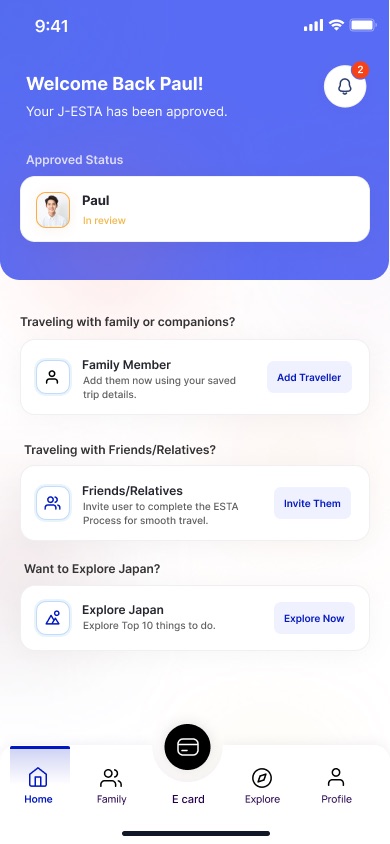
- Created a shared family record instead of treating each traveler as an isolated application.
- Explored blue for government continuity and red for Japanese cultural identity.
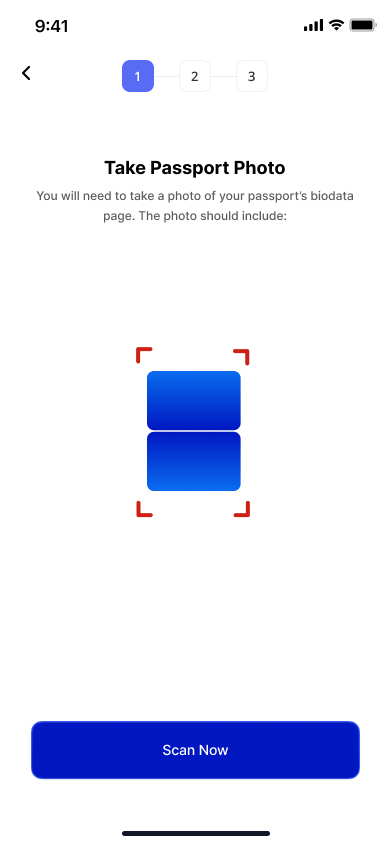
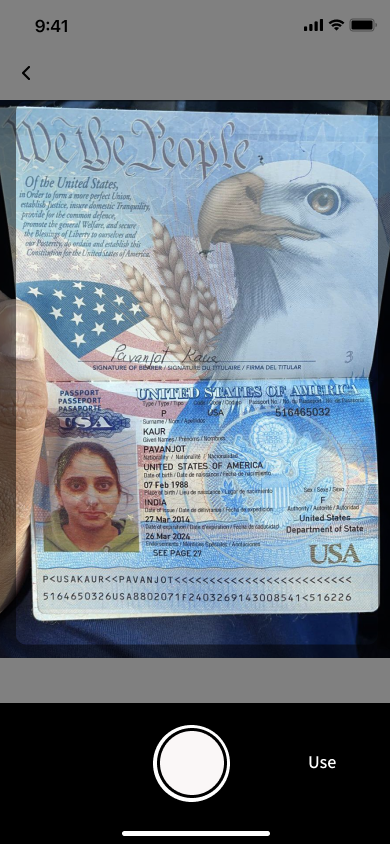
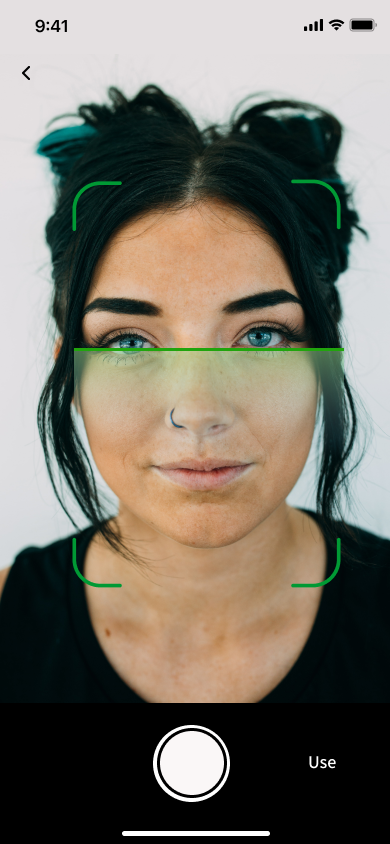
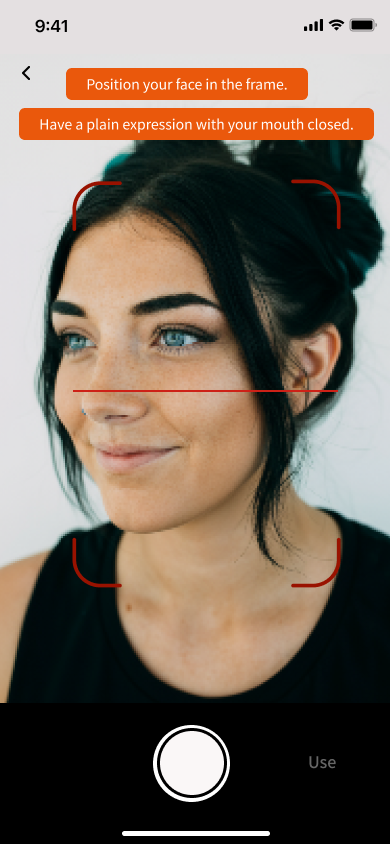
- Designed live-camera passport capture and a visible review step to strengthen trust.
From eligibility to a reusable travel identity.
The evidence follows the traveler in order. The two-column sequence keeps related decisions together while showing how the service progresses from pre-check to approval and continued use.
Approval becomes a reusable digital credential.
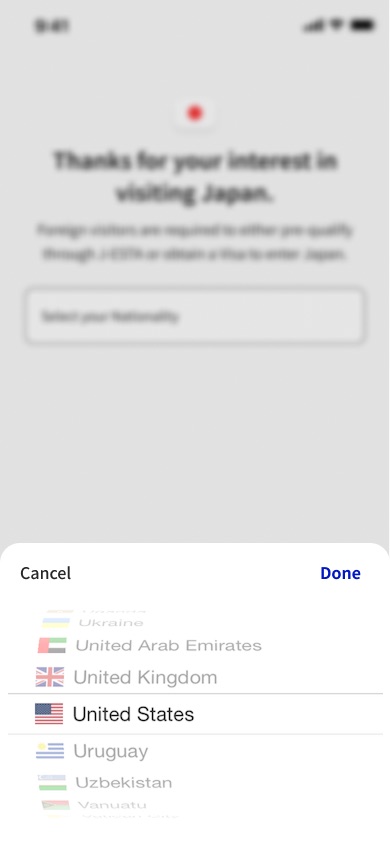
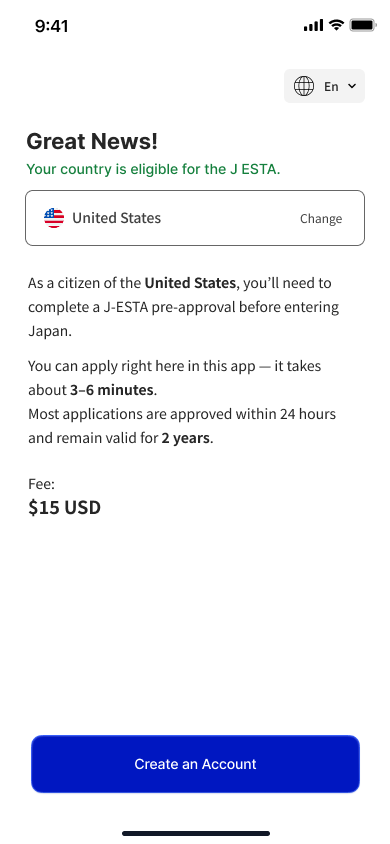
Give travelers certainty before they begin.

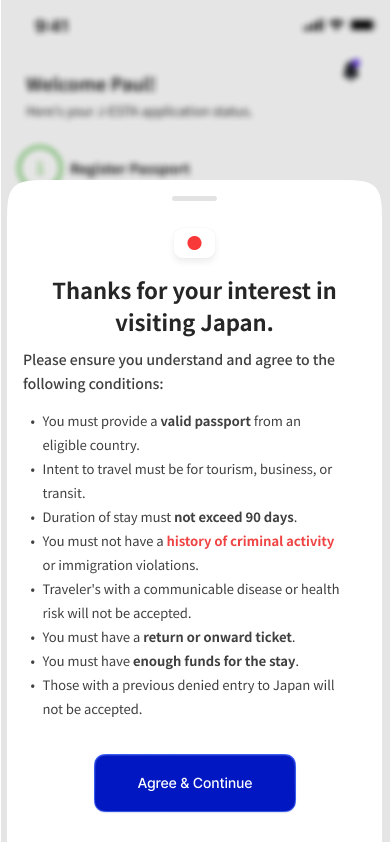
Turn a complex application into manageable steps.
Guide passport and face capture with visible feedback.
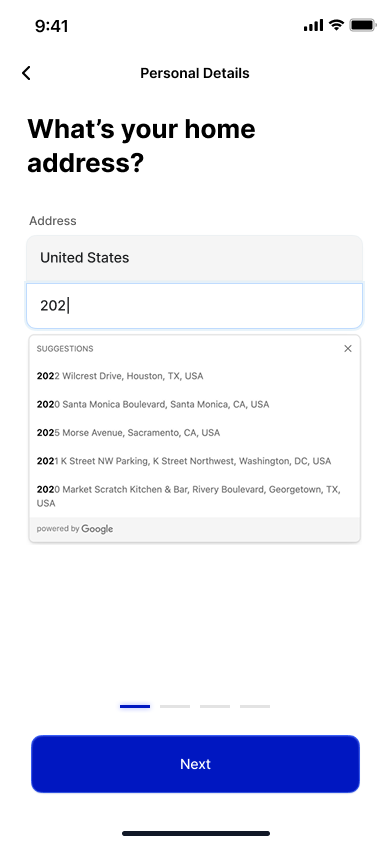
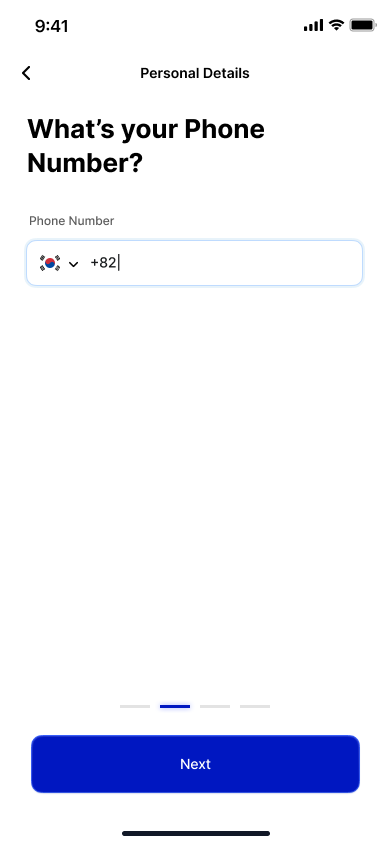
Collect essential details without presenting one long form.
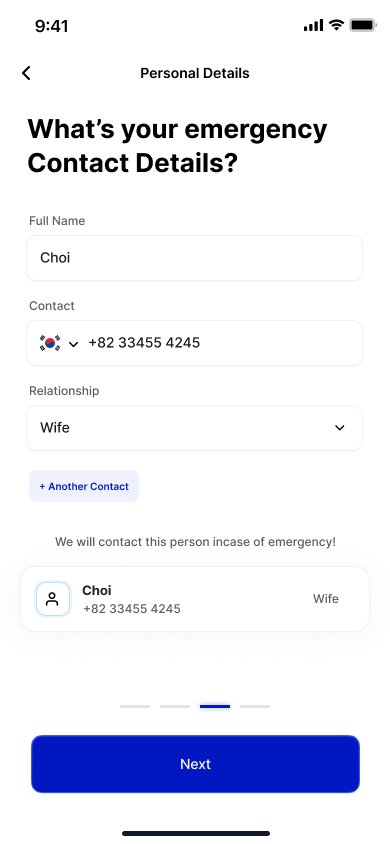
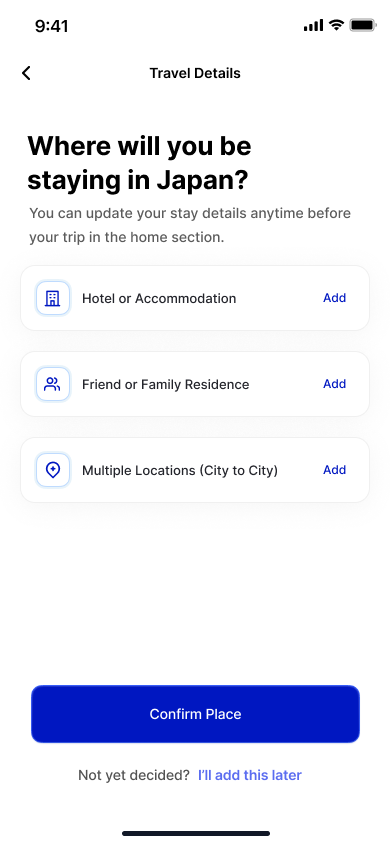
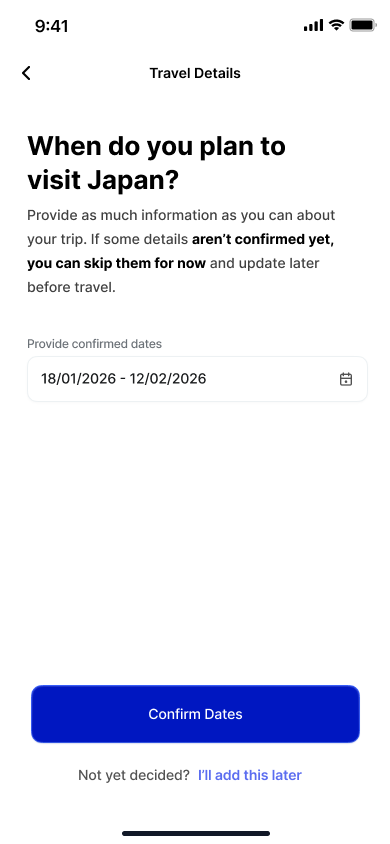
Support both confirmed plans and information travelers will add later.
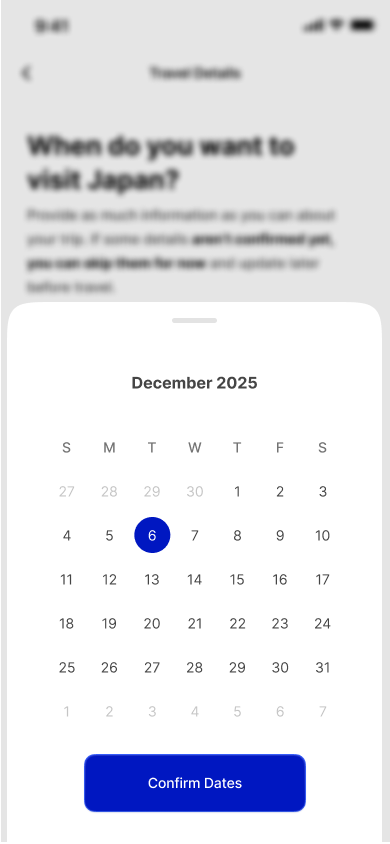
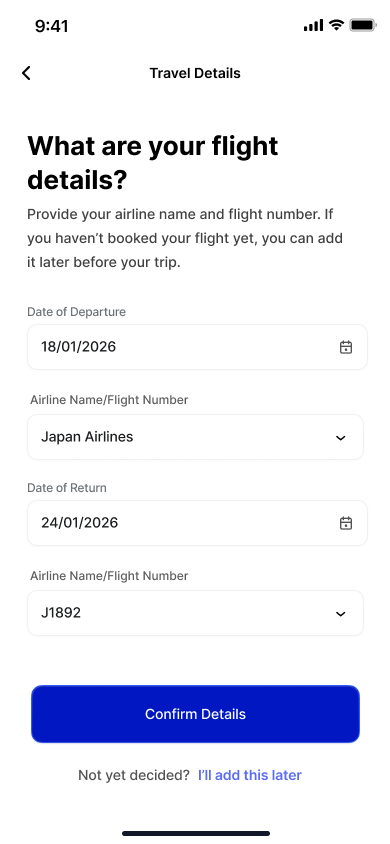
Close the application with clear cost and confirmation.
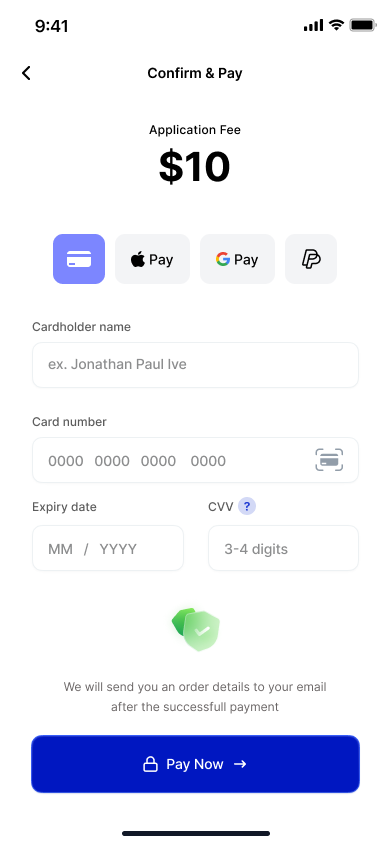
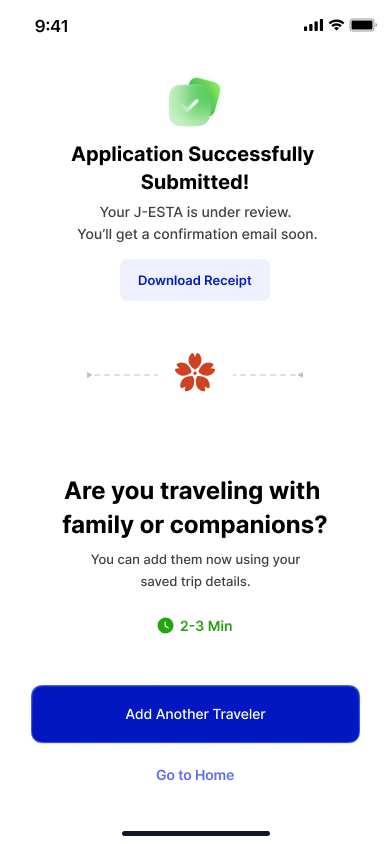
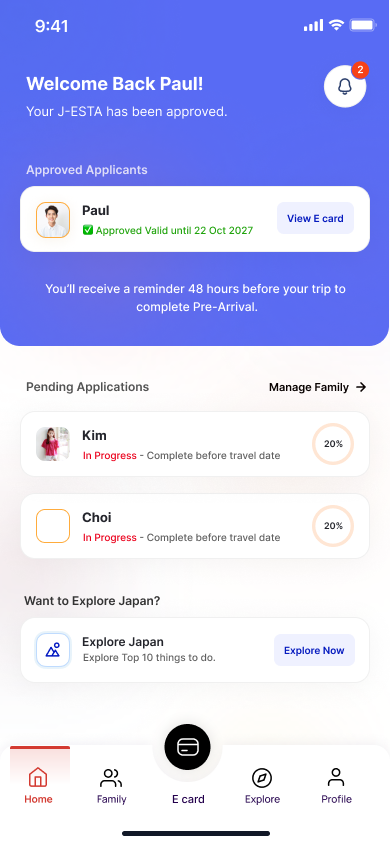
Keep approval, family status, and pre-arrival tasks in one place.
What changed
The E‑Card became the proposal’s clearest differentiator - the idea that most changed the direction from digitized paperwork toward a useful identity product.
Government services need more than efficiency. Familiarity, verification, family context, and trust must be designed into the product model from the beginning.