Reimagining clinical documentation for WebPT’s Gen 3 EMR.
WebPT wanted clinicians talking to patients, not typing. I owned the clinical workstream inside a five-workstream transformation and proposed the AI-scribe direction from observed clinical behavior.
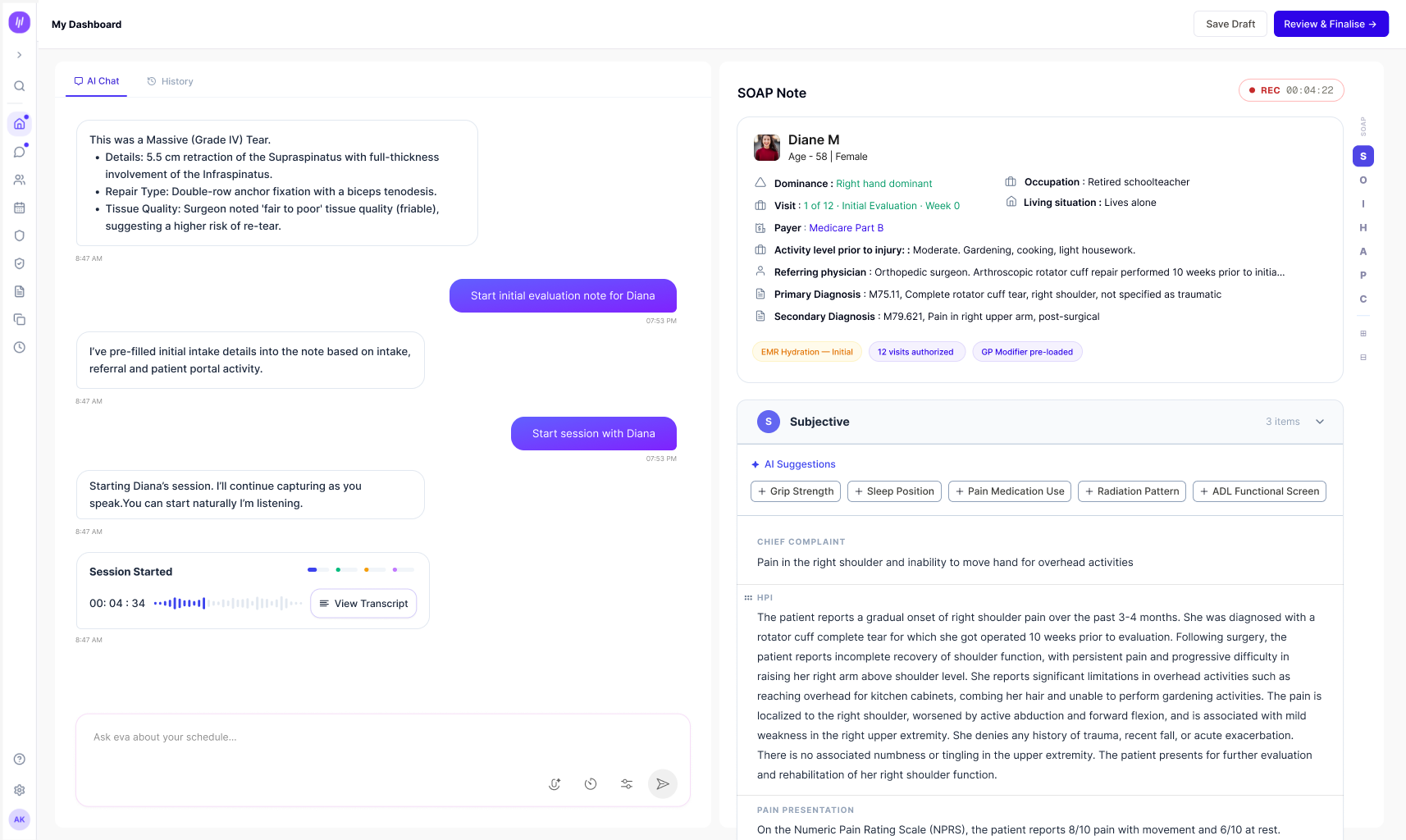
A legacy ERP, five parallel pods, and no shared picture of Gen 3.
WebPT was rebuilding a mature clinical platform as “Gen 3”: a fresh experience, new design standards, and AI-enabled workflows.
Different pods explored roughly five visual directions, but none gave the client enough confidence to approve a path. Sprint planning was approaching while even the subject-matter experts could not yet describe how the complete experience should work.
The existing product exposed the system’s complexity.
I studied the current portal and its dense ERP forms before designing anything new. That audit gave me a model of the product while the other teams were still exploring visual themes.
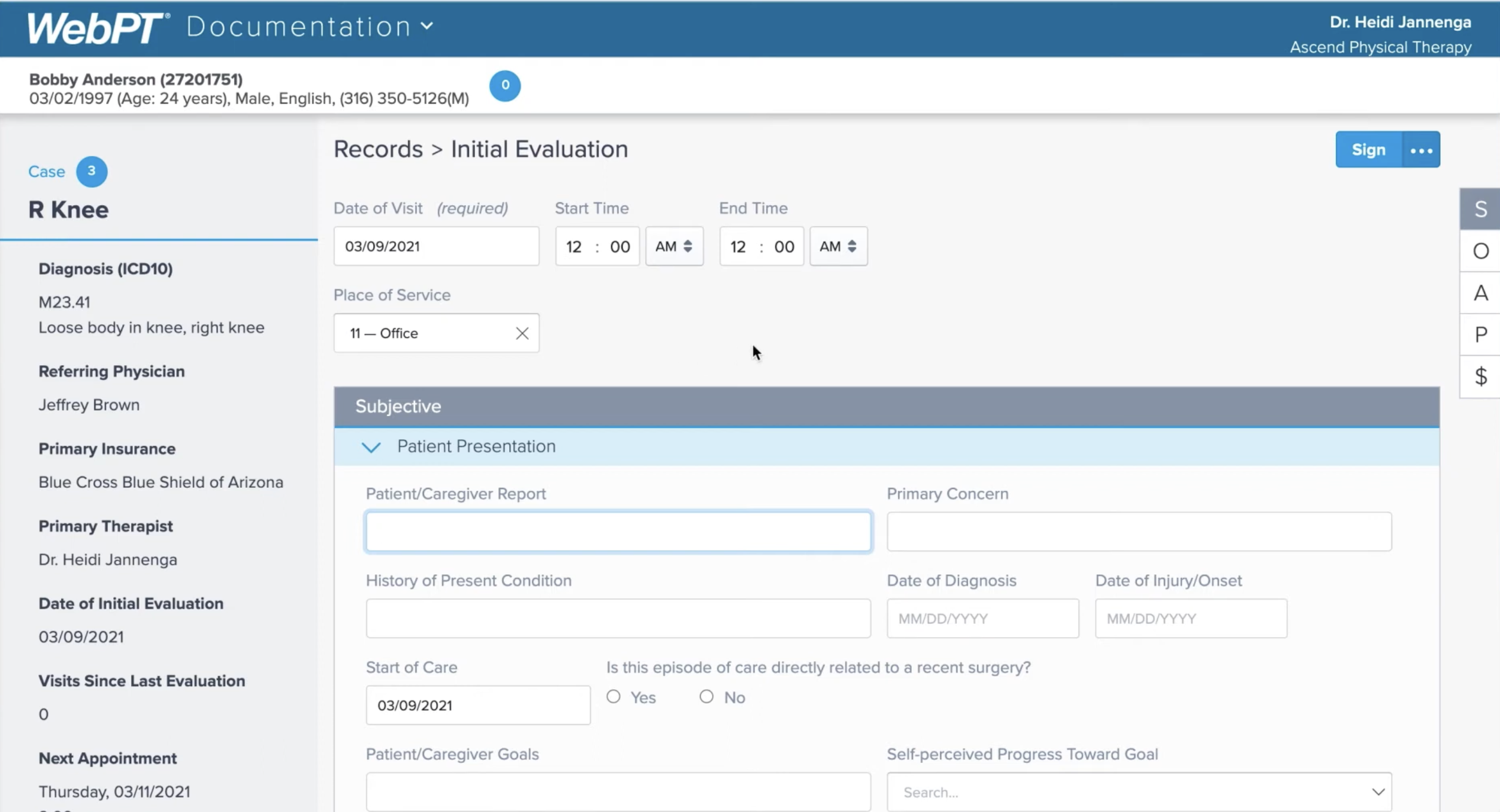
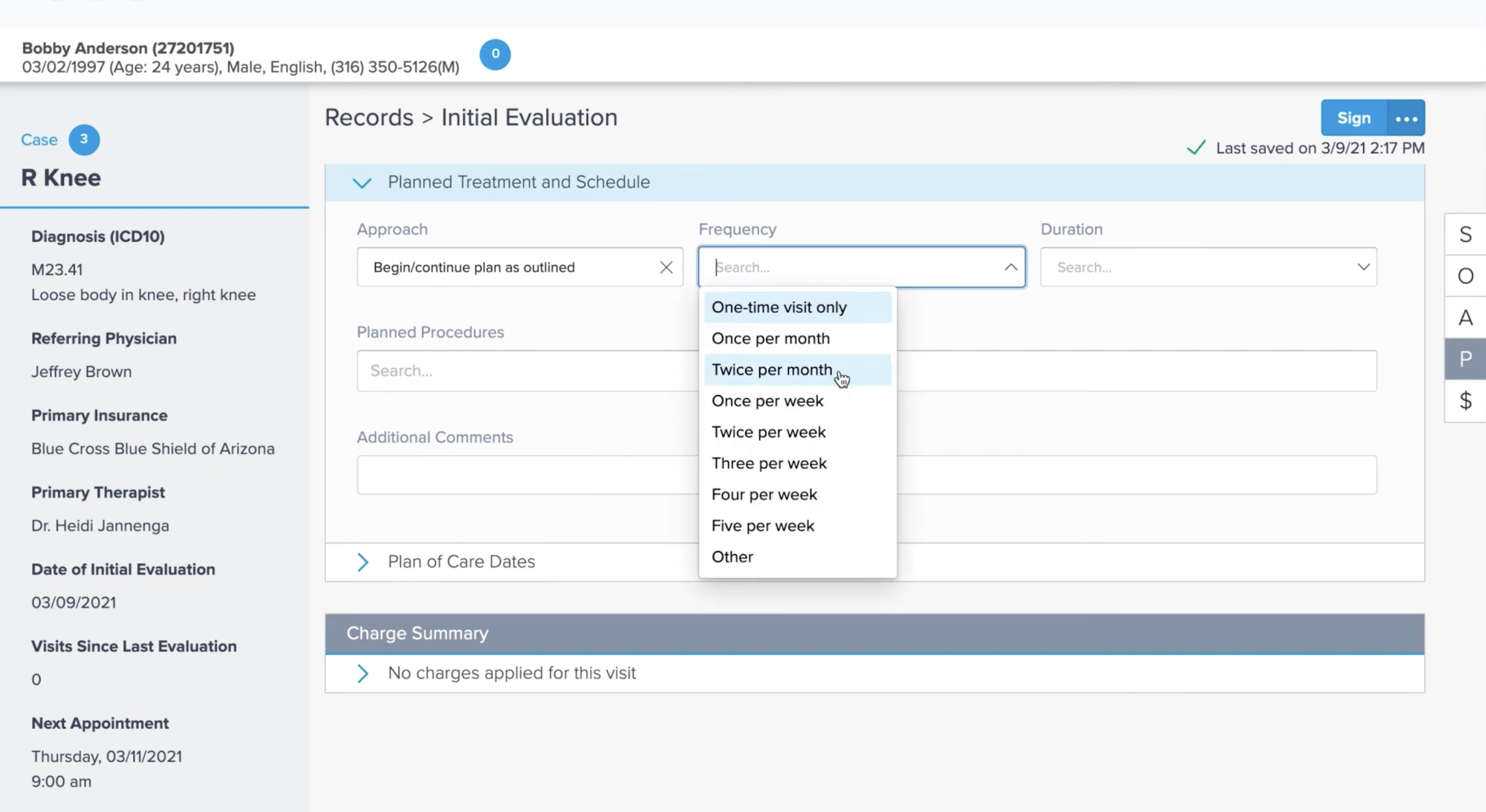
The first concepts organized the work, but they did not yet remove it.
We explored how a therapist could manage more than one active patient and move between documentation states. This made the operational complexity visible, but it still assumed the therapist would drive every interaction.
That limitation became useful evidence: a cleaner interface alone would not solve the attention problem.
The interviews moved the problem from screens to attention.
Therapists were losing two to four hours a day to documentation while dividing their attention between the patient and the system.
SMEs clarified which SOAP-note information remained clinically necessary. Observation revealed the larger opportunity: preserve that structure while removing the burden of capturing it throughout the visit.
Design the system to listen, not wait to be told.
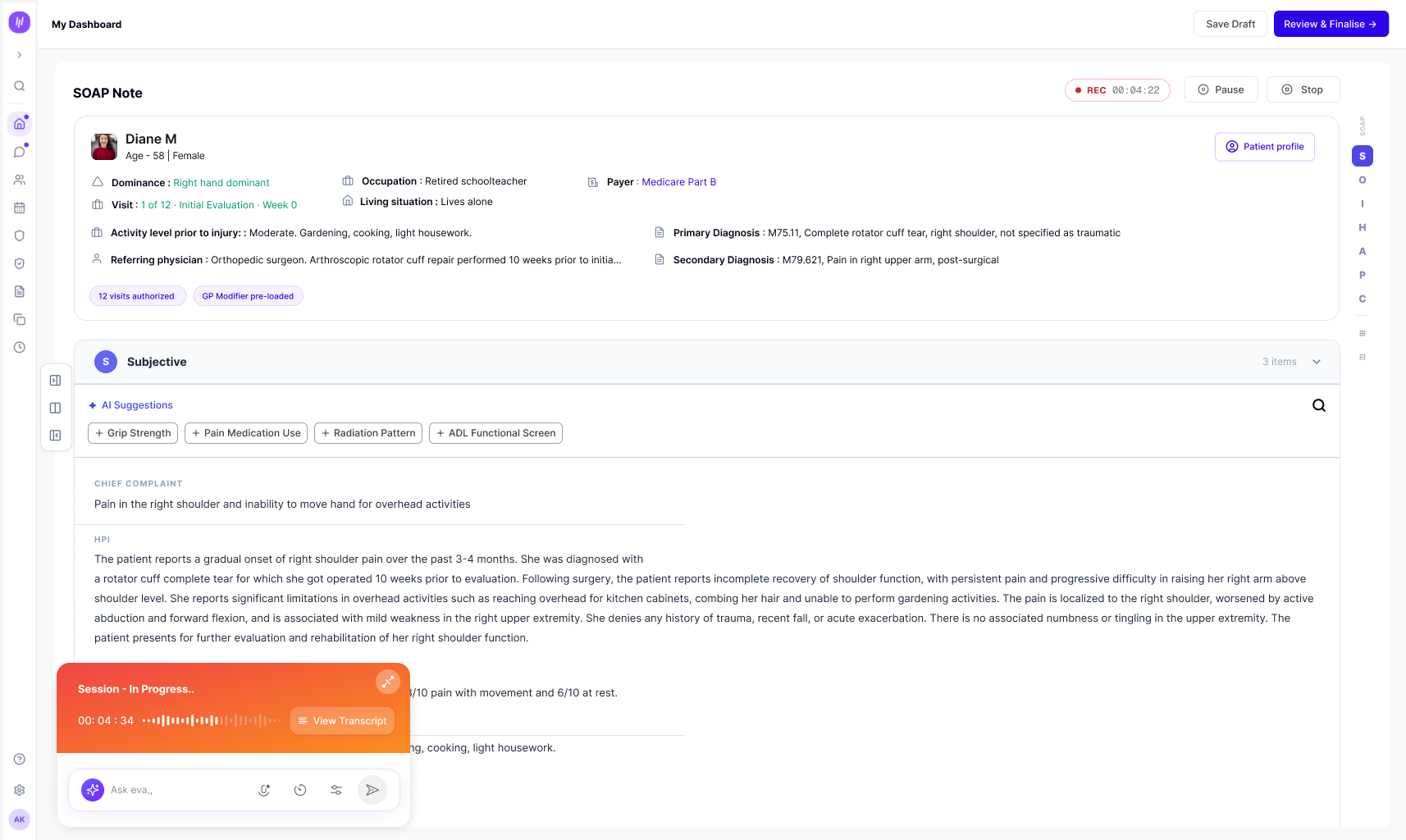
I proposed an ambient scribe that captures the clinical conversation, organizes it into a draft SOAP note, and leaves the therapist in control of review and finalization.
Many legacy tools became four understandable buckets.
The existing product exposed a large collection of separate tools. I reorganized the clinical information into four higher-level groups that could support both manual work and information captured automatically by the scribe.
This was the bridge between the idea and a scalable product structure: the therapist no longer had to hunt across the system while treating a patient.
The scribe became a complete therapist workflow.
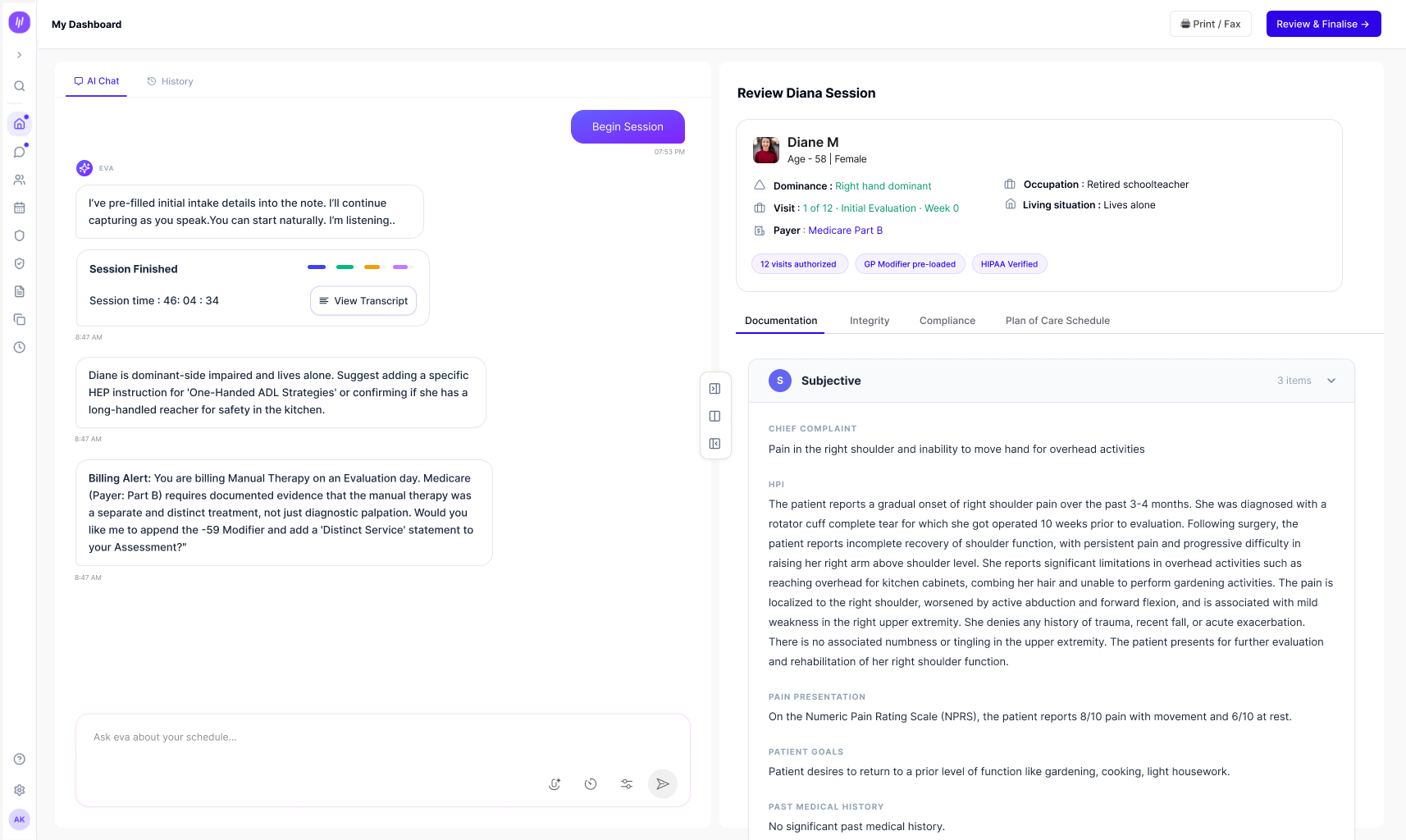
The concept expanded from capture into screening, live transcription, visual clinical data, and structured SOAP-note review.
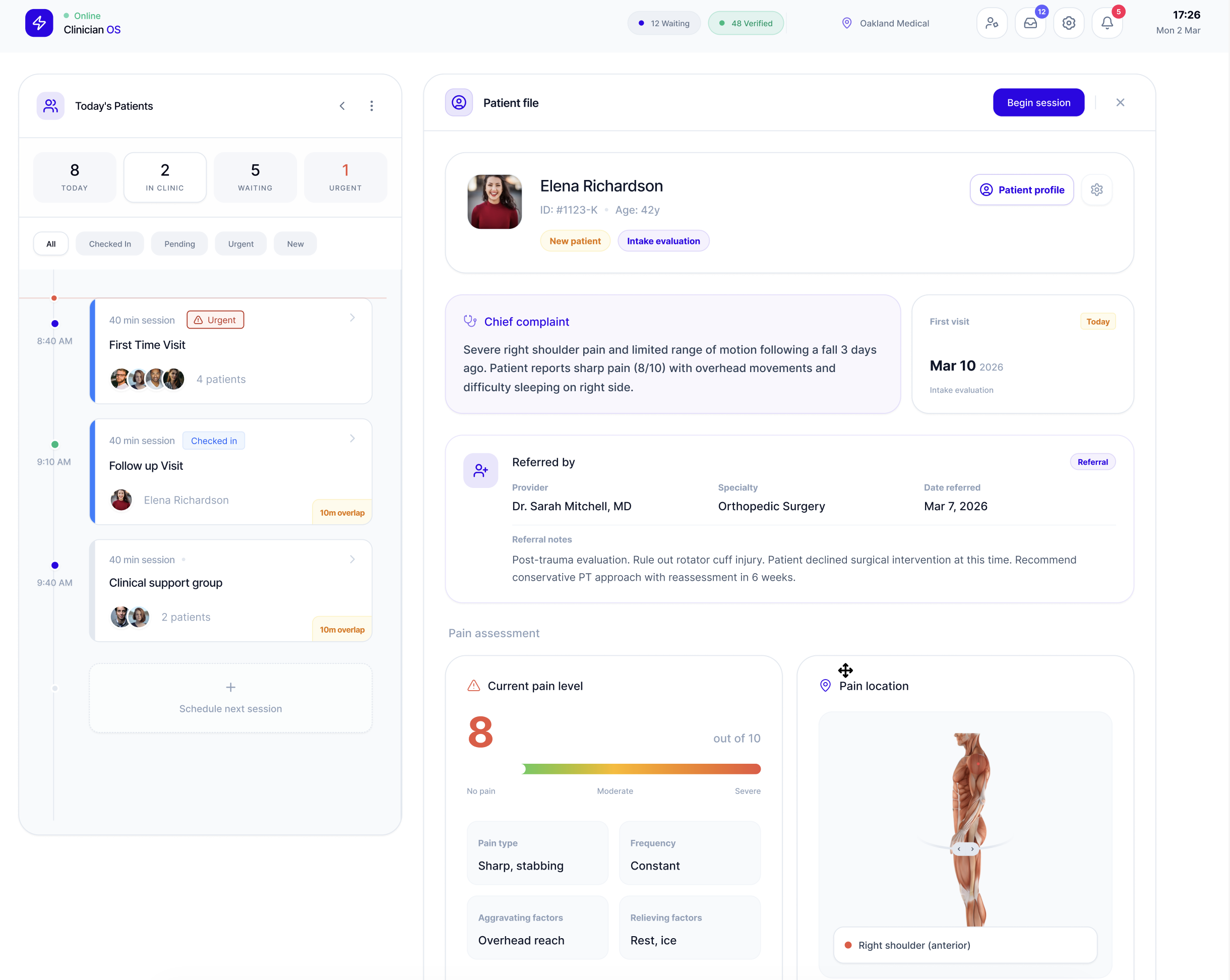
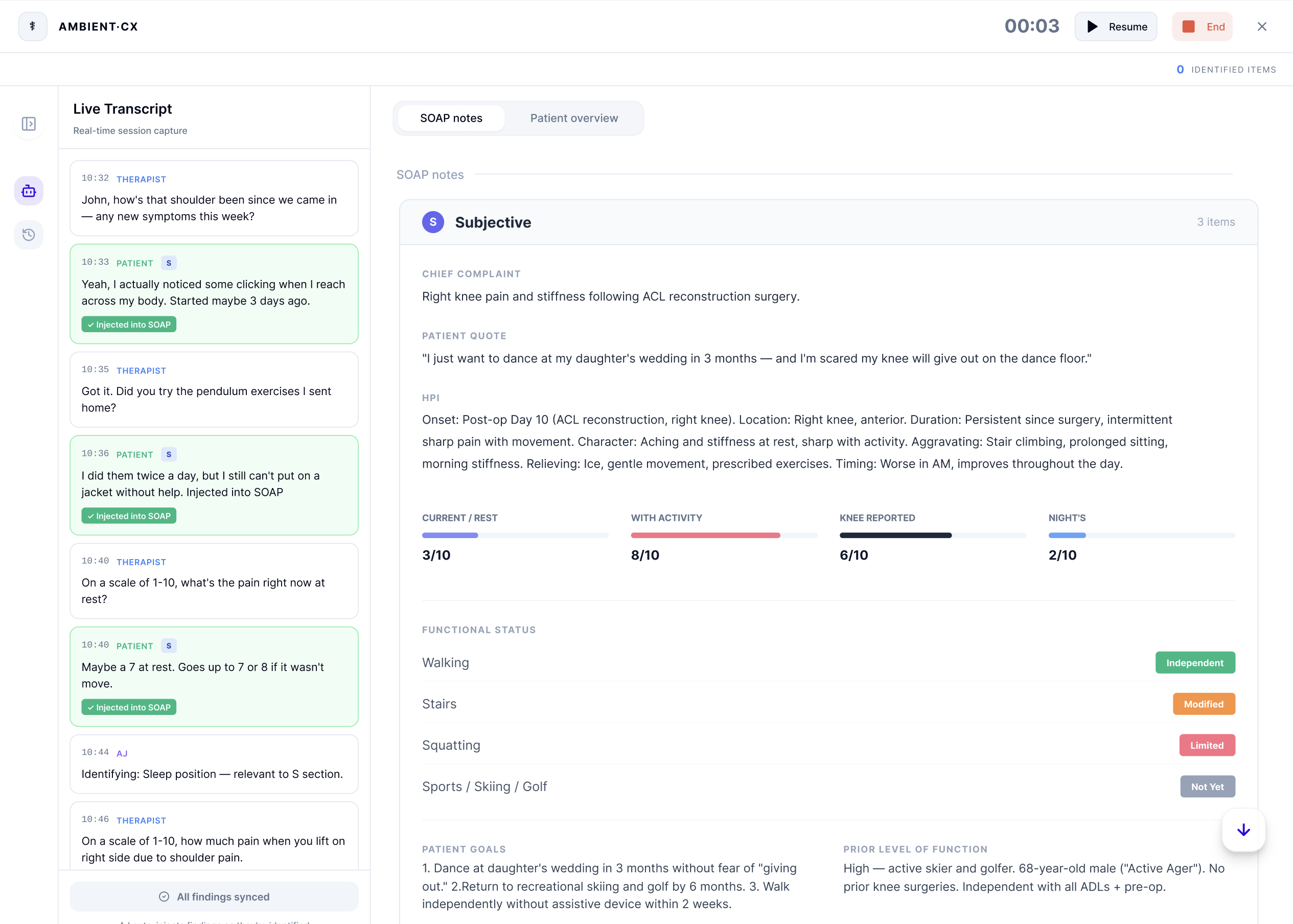
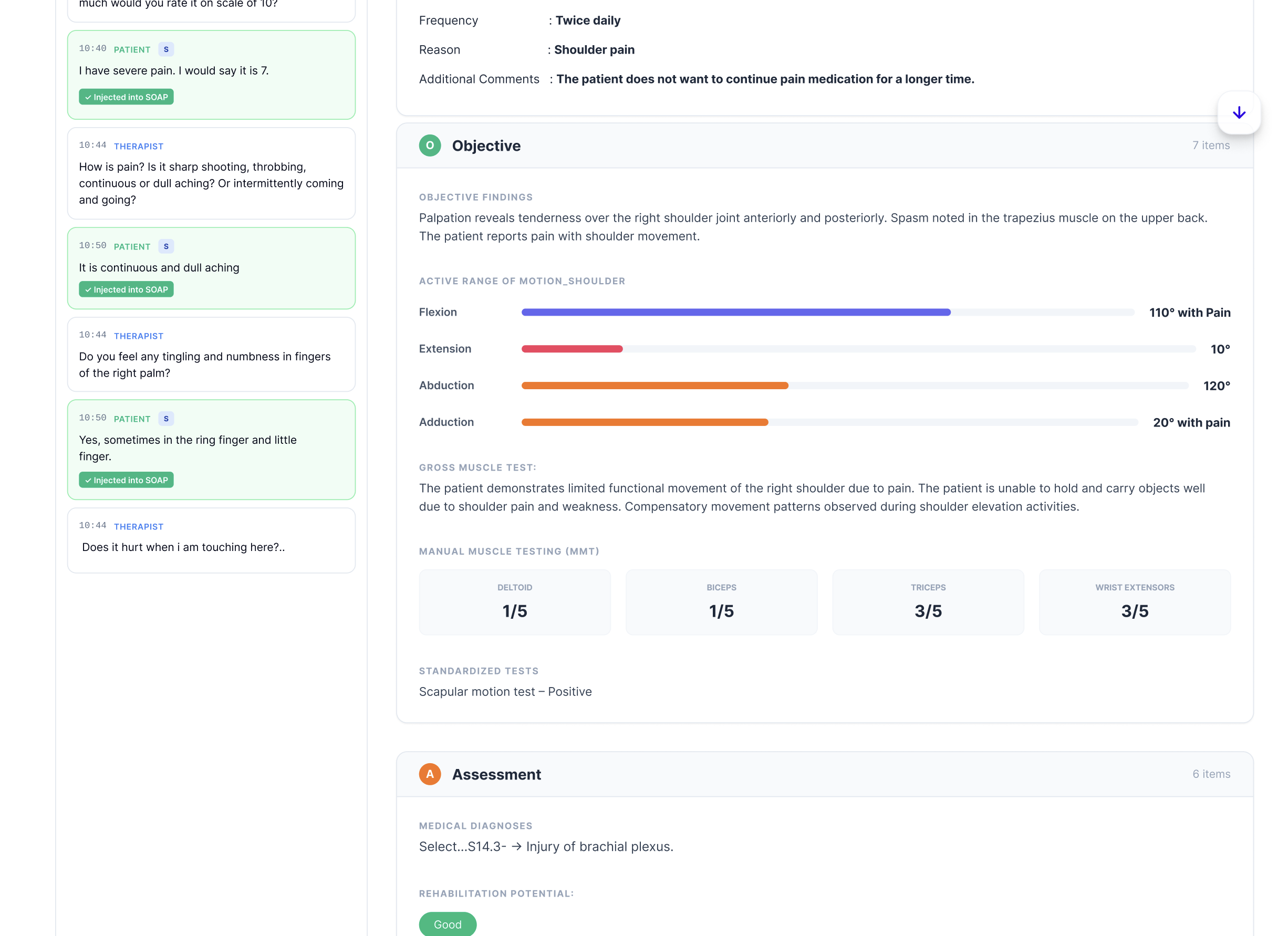
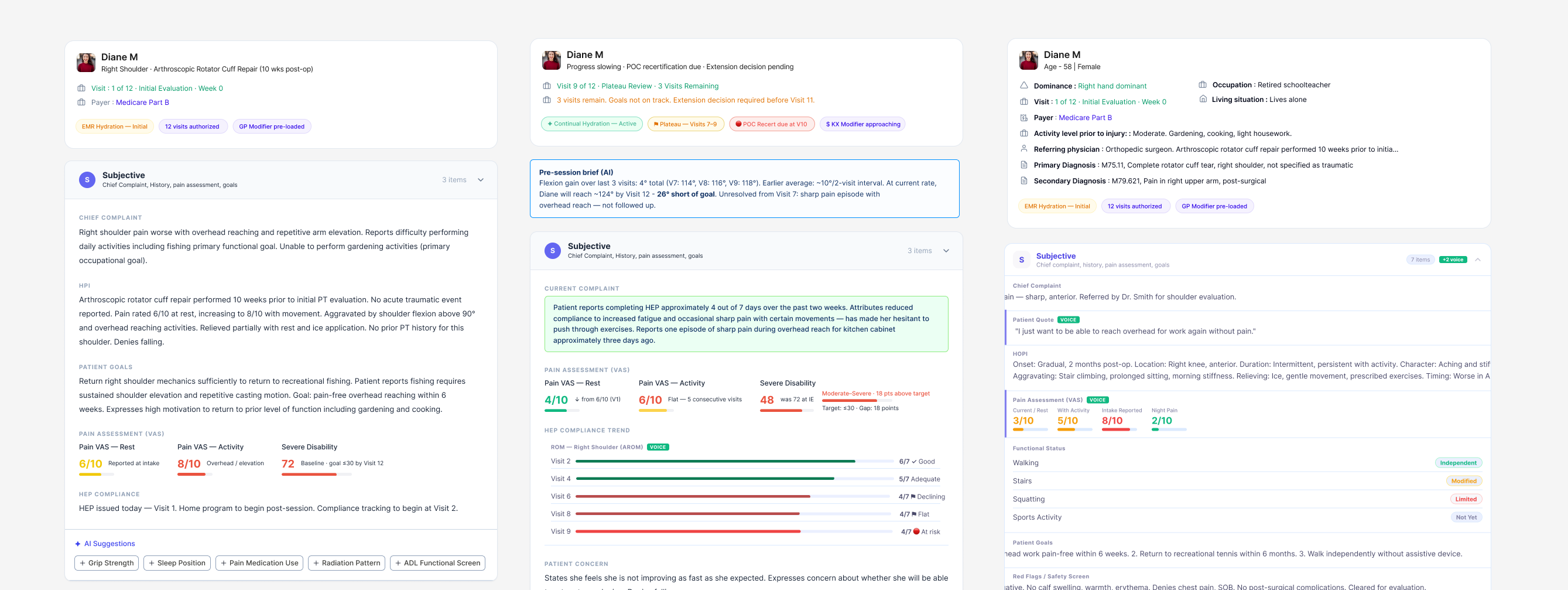
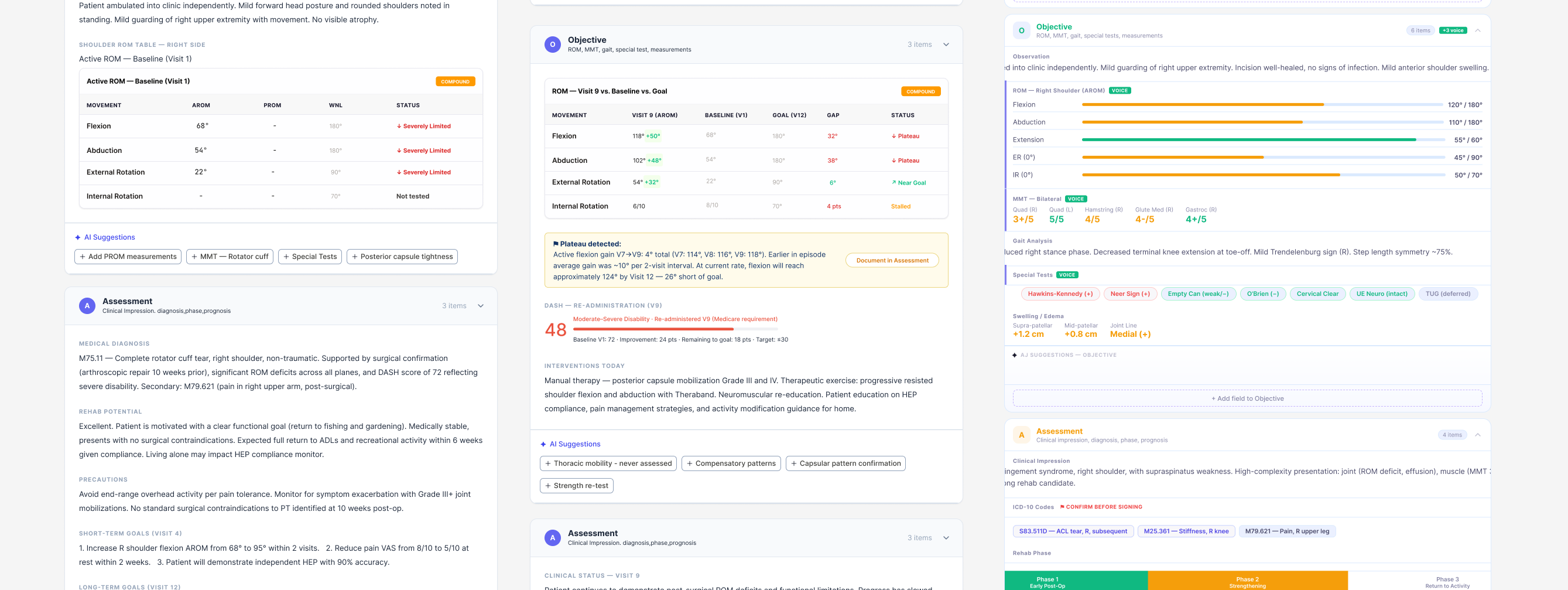
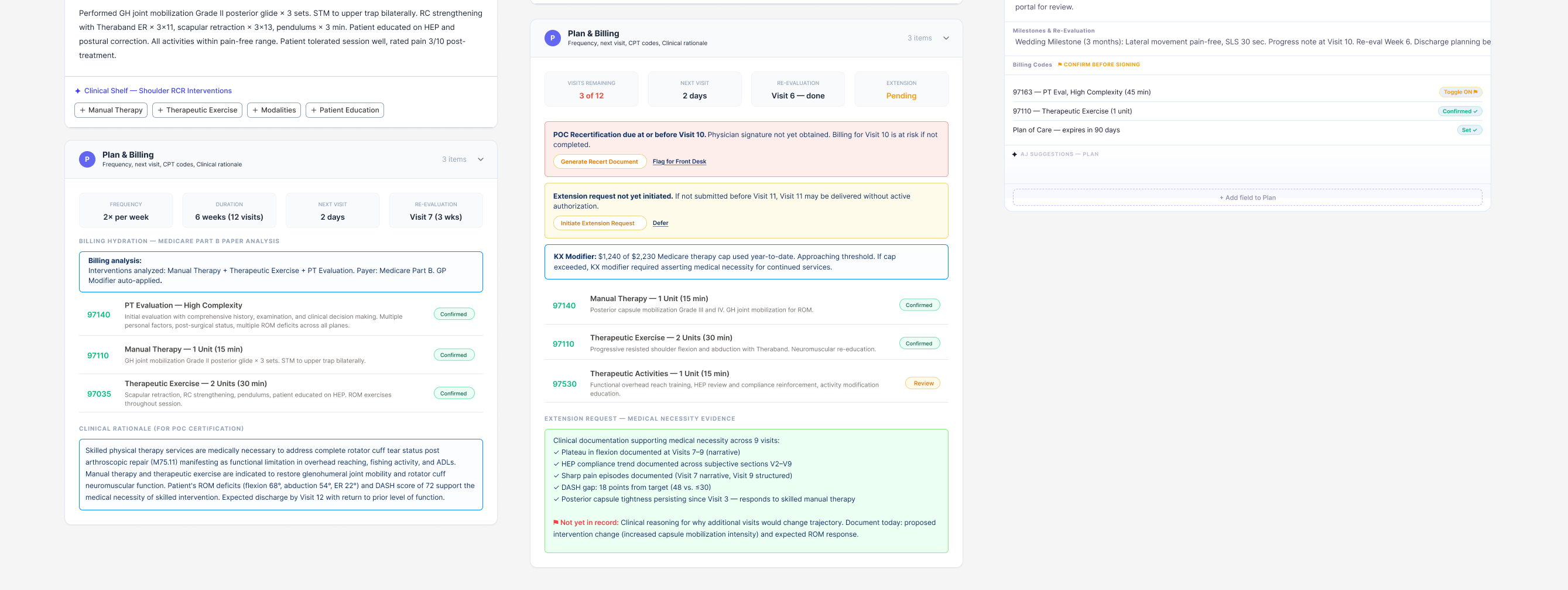
The business chose chat as the entry point. The scribe system remained the foundation.
The client wanted the final experience to feel conversational: chat on the left and the scribe workspace on the right. I adapted the interaction model without losing the capture, structure, and therapist-control principles we had validated.
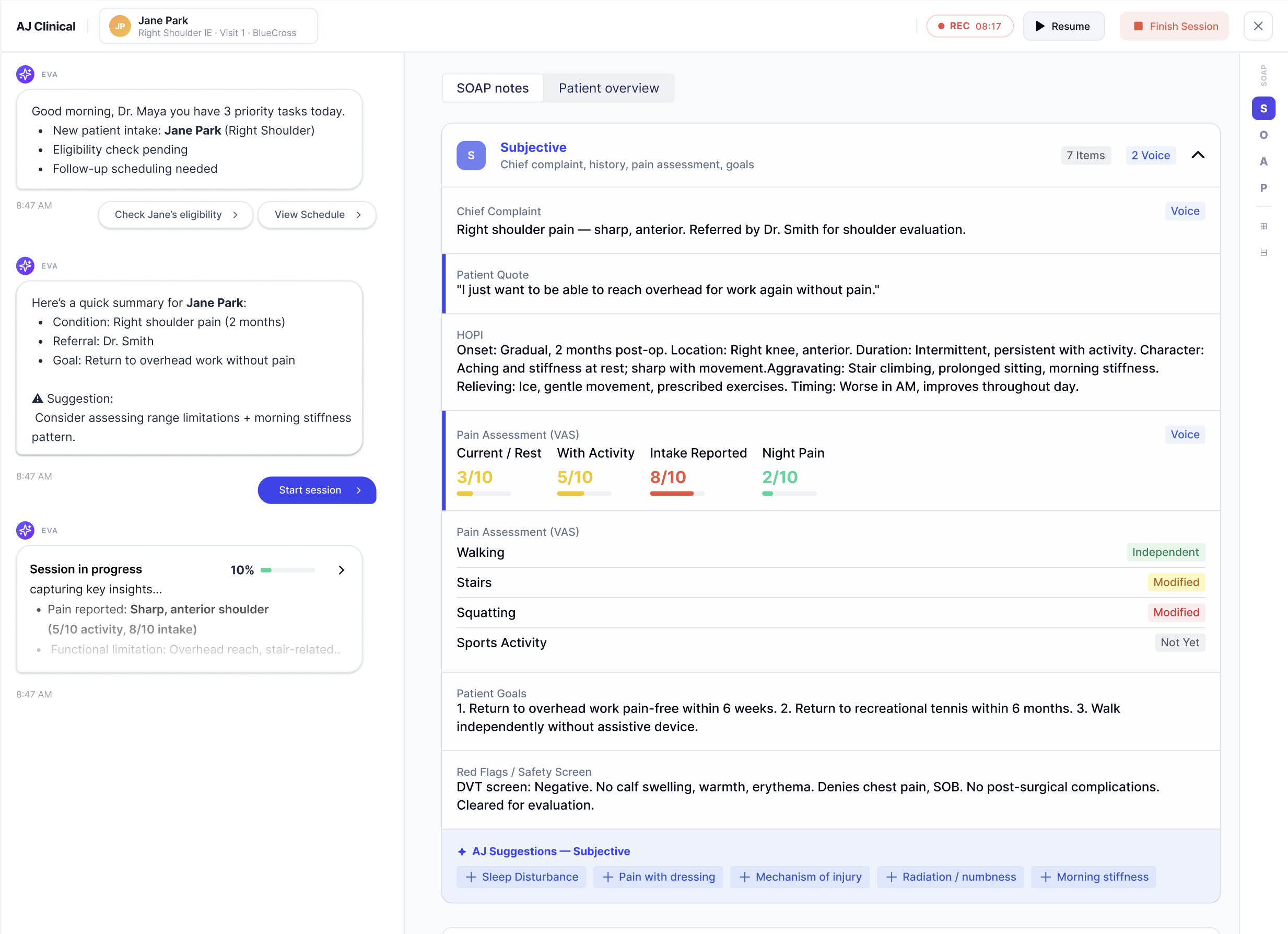
From patient context to completed documentation.
This walkthrough connects the individual screens into the full therapist session.
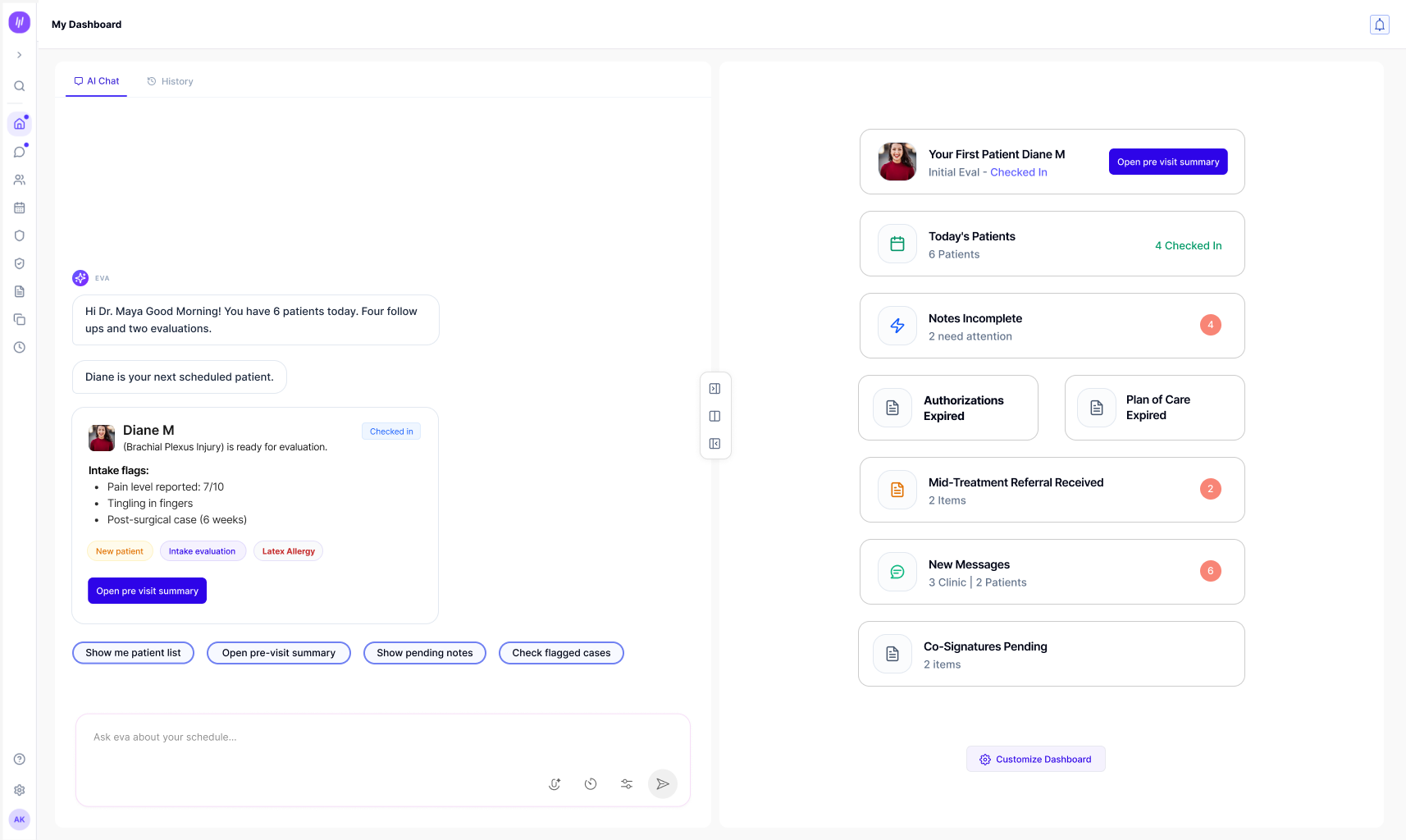
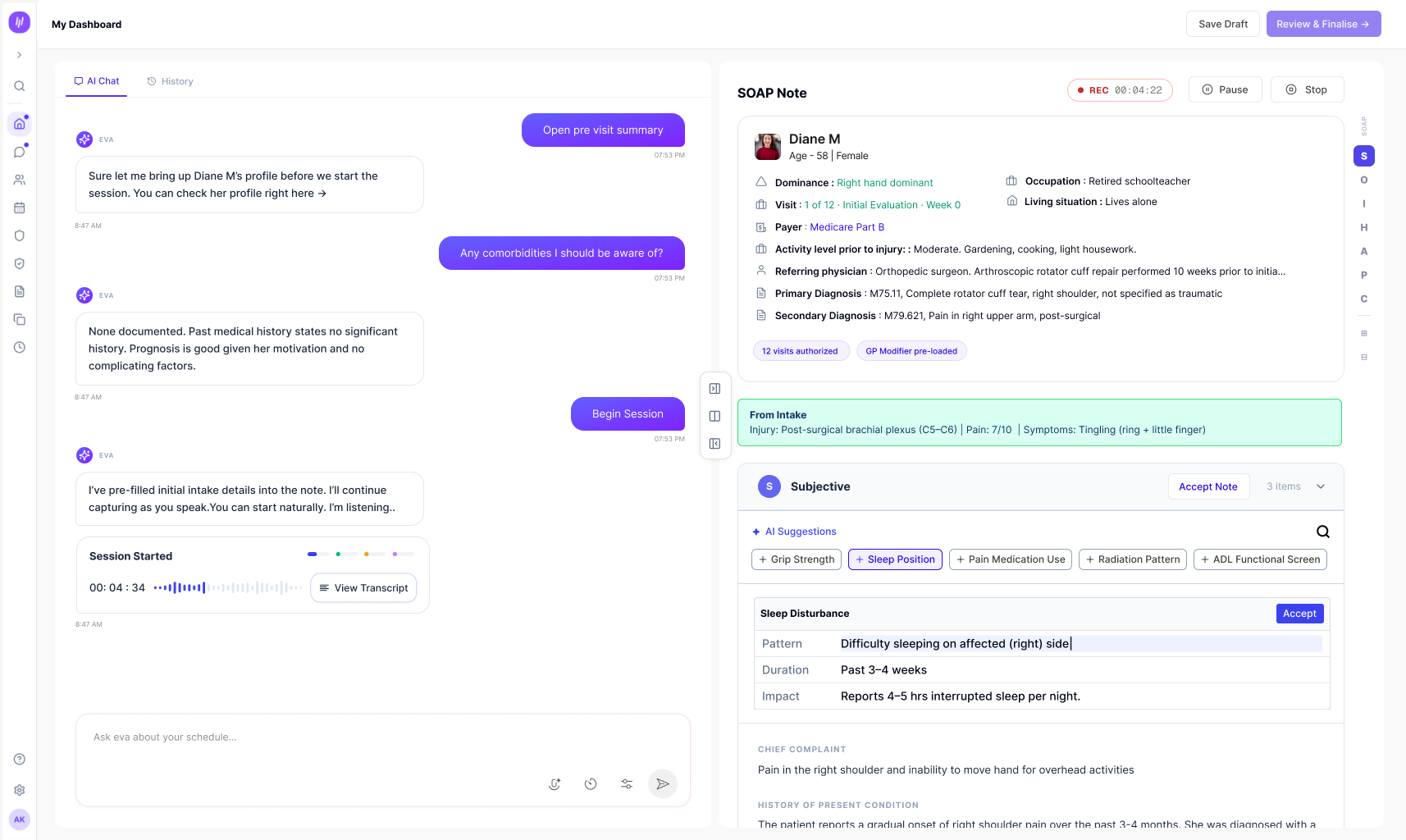
The system at product scale.
The final sequence shows how daily work, an active visit, structured review, and documentation come together inside Gen 3.
From ambiguity to an end-to-end clinical direction.
- Audited the legacy product and mapped the system before the clinical sprint began.
- Worked with SMEs and therapists to identify documentation, not another dashboard, as the central workload problem.
- Reframed the experience around an ambient scribe with explicit therapist review and control.
- Simplified many legacy tools into four information groups that supported manual and AI-assisted capture.
- Built the working simulations that gave the team and client a shared picture of the proposed experience.
- Adapted the model to the client’s chat direction and designed the complete therapist workflow.
The prototype changed the conversation from visual preference to product direction.
Therapists could respond to a complete workflow rather than isolated screens, and their feedback gave the business a grounded reason to move forward. The split-screen AI-assistance and structured-note pattern became the model used across the workstream.
The most important early outcome was clarity: a fragmented modernization effort gained a tangible clinical direction rooted in the legacy system, therapist evidence, and an end-to-end working prototype.
Sensing what users need and getting a client ready to validate and sign off are different jobs. Complex consulting work requires both.